Yoga Education in India: How India Is Taking Yoga to the World
Introduction of India and the Future of Global Yoga
Yoga has travelled a remarkable journey from the ancient traditions of India to becoming a global movement embraced by millions of people around the world. Today, yoga is practiced in schools, universities, wellness centres, hospitals, research institutions, workplaces, and homes across diverse cultures and communities.
While many people initially discover yoga through physical postures, deeper yoga education offers a much broader understanding of health and well-being. It introduces individuals to mindful living, conscious breathing, traditional yogic philosophy, self-awareness, relaxation, and the importance of maintaining balance in everyday life.
India continues to play an important role in preserving, developing, and promoting authentic yoga education. Through educational institutions, teacher-training programmes, research initiatives, public wellness programmes, and international collaborations, India is helping make the knowledge and practice of yoga accessible to people from different backgrounds and cultures.
The growing interest in yoga education reflects a wider global search for healthier lifestyles, effective approaches to stress management, emotional well-being, and sustainable methods of wellness. As modern life becomes increasingly fast-paced and technology-driven, yoga education provides practical tools that encourage individuals to reconnect with themselves while developing greater physical, mental, and emotional resilience.
The future of yoga is therefore not limited to practice alone. It also encompasses education, research, accessibility, responsible teaching, and a deeper understanding of the traditional principles behind the practice. This evolving approach makes yoga education an increasingly important part of the global wellness movement.
Key Takeaways
- ✓ Yoga education extends beyond physical exercise and includes philosophy, breathing, meditation, and lifestyle awareness.
- ✓ India continues to be a global leader in yoga education and research.
- ✓ Schools and universities are increasingly adopting yoga programmes.
- ✓ Research is helping strengthen understanding of yoga’s role in wellness.
- ✓ Qualified teachers play an important role in maintaining quality education.
- ✓ Digital technology is expanding access to yoga learning worldwide.
- ✓ Yoga education is becoming more inclusive and accessible to diverse populations.
What Is Yoga Education?
Yoga education refers to the structured learning of yoga practices, principles, philosophy, ethics, breathing techniques, meditation, and wellness approaches. Unlike casual exposure to yoga through social media or occasional classes, yoga education aims to provide a deeper understanding of the discipline.
A comprehensive yoga education may include:
- ✓Asanas (Yoga Postures)
- ✓Pranayama (Breathing Practices)
- ✓Meditation
- ✓Relaxation Techniques
- ✓Yoga Philosophy
- ✓Anatomy and Physiology
- ✓Lifestyle Management
- ✓Stress Reduction Techniques
- ✓Teaching Methodology
Yoga education helps students understand not only how to perform practices but also why they are performed and how they can be integrated into daily life.
Why Yoga Education Is Becoming More Important
Modern lifestyles have introduced many challenges. Long working hours, constant digital engagement, reduced physical activity, irregular sleep, and increasing stress levels affect people of all ages.
Many individuals seek yoga not simply as a fitness activity but as a comprehensive system for improving overall well-being.
Yoga education helps individuals:
Yoga education helps individuals:
- ✓ Develop healthier lifestyle habits.
- ✓ Improve body awareness and posture.
- ✓ Build emotional resilience.
- ✓ Enhance concentration and focus.
- ✓ Understand stress-management techniques.
- ✓ Support overall wellness and self-awareness.
As awareness of holistic wellness continues to grow, yoga education is increasingly viewed as an important component of modern health education.
Evolution of Yoga Education in India
India has been the birthplace of yoga for thousands of years. Ancient yogic knowledge was traditionally passed from teacher to student through oral instruction and experiential learning.
Over time, yoga education evolved into more organised systems of teaching. Modern institutions, universities, research centres, and specialised yoga schools now offer structured programmes that combine traditional wisdom with contemporary educational methods.
Today, yoga education in India may include:
- ✓ Certificate programmes.
- ✓ Diploma courses.
- ✓ Teacher-training programmes.
- ✓ University degrees.
- ✓ Research-based studies.
- ✓ Online educational programmes.
This educational growth has helped make yoga more accessible while preserving important traditional teachings.
Hyderabad Becomes Part of a Global Yoga Conversation
Hyderabad has emerged as one of the important urban centres contributing to the expansion of yoga education and wellness awareness in India.
The city hosts a growing number of yoga schools, wellness centres, educational programmes, teacher-training initiatives, workshops, and community outreach activities. These efforts provide opportunities for people of different ages and backgrounds to learn yoga in structured and meaningful ways.
Hyderabad’s diverse population creates a unique environment where traditional yoga teachings can interact with modern educational approaches, professional lifestyles, and global perspectives.
As yoga education continues to expand, cities such as Hyderabad are helping connect local communities with broader national and international wellness movements.
Yoga Education in Schools
Educational institutions increasingly recognise the potential benefits of introducing yoga programmes for students.
School-based yoga education may support:
- ✓ Physical fitness and mobility.
- ✓ Concentration and attention.
- ✓ Stress management skills.
- ✓ Emotional awareness.
- ✓ Healthy lifestyle habits.
Many educators view yoga as a complementary educational tool that can contribute to a balanced learning environment.
The Growing Role of Research in Yoga Education
Research has become an important component of modern yoga education.
Universities, medical institutions, and research organisations continue to explore how yoga may influence various aspects of physical, mental, and emotional well-being.
Research helps:
- ✓ Improve educational quality.
- ✓ Support evidence-informed teaching practices.
- ✓ Expand understanding of yoga applications.
- ✓ Encourage interdisciplinary collaboration.
As research continues to grow, yoga education may become increasingly integrated with broader wellness and educational systems.
The Global Reach of Yoga Education
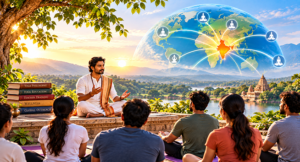
Yoga education is no longer limited to India. Educational programmes, teacher-training courses, university initiatives, community classes, and wellness organisations now exist in many countries around the world.
This global expansion has created opportunities for cultural exchange, collaborative research, and broader access to yoga learning.
Individuals from diverse backgrounds are discovering yoga through:
- ✓ Educational institutions.
- ✓ Community wellness programmes.
- ✓ Professional teacher-training courses.
- ✓ Online learning platforms.
- ✓ Workplace wellness initiatives.
As awareness continues to grow, yoga education is becoming an important part of global conversations about wellness, preventive health, and quality of life.
Yoga Is More Than Physical Exercise
One of the most important messages within yoga education is that yoga extends beyond physical movement.
While postures remain a visible and valuable aspect of practice, traditional yoga education also includes mental discipline, self-reflection, ethical principles, breathing practices, meditation, and lifestyle awareness.
A balanced yoga education encourages students to understand the relationship between body, mind, emotions, habits, and overall well-being.
This broader perspective helps distinguish yoga education from purely fitness-oriented approaches.
Yoga Education for Different Communities
Modern yoga education is increasingly being adapted to meet the needs of different populations and communities.
Educational programmes may be designed for:
- ✓ Children and students.
- ✓ Working professionals.
- ✓ Older adults.
- ✓ Community groups.
- ✓ Wellness-focused individuals.
This inclusive approach helps make yoga education more accessible while encouraging lifelong learning and participation.
The Importance of Qualified Teachers
As interest in yoga continues to grow, the role of qualified teachers becomes increasingly important.
Effective yoga education requires instructors who possess both practical experience and educational understanding.
Qualified teachers can help students:
- ✓ Learn safely and responsibly.
- ✓ Understand foundational principles.
- ✓ Develop consistent practice habits.
- ✓ Explore yoga beyond physical postures.
Strong teacher education programmes therefore remain an essential part of the future of yoga education.
Technology and the Future of Yoga Learning
Technology has significantly expanded access to yoga education.
Online classes, digital resources, virtual workshops, mobile applications, and educational platforms now allow individuals to learn from almost anywhere in the world.
Digital learning can help:
- ✓ Increase accessibility.
- ✓ Support flexible learning schedules.
- ✓ Connect students with experienced educators.
- ✓ Expand educational opportunities globally.
While technology offers many advantages, educational quality and responsible instruction remain important considerations.
India’s Continuing Role in Global Yoga Education
India continues to play a significant role in shaping the future of yoga education around the world.
Through educational institutions, research initiatives, teacher-training programmes, cultural exchanges, and international collaborations, India contributes to the preservation and dissemination of yoga knowledge.
This leadership role helps ensure that future generations can access both traditional teachings and evolving educational approaches.
“The future of yoga lies not only in practice, but also in education, research, accessibility, and responsible sharing of knowledge.”
The Modern Yoga Student
Today’s yoga student is often seeking more than physical fitness. Many individuals are interested in learning practical skills that can support long-term well-being, self-awareness, stress management, and personal growth.
Modern yoga education provides opportunities to explore both traditional teachings and contemporary applications. Students can learn how yoga principles relate to everyday life while developing greater awareness of their physical, mental, and emotional habits.
This educational journey encourages lifelong learning and supports a deeper understanding of holistic wellness.
Yoga Education at Yogalaya Vedic
Yogalaya Vedic is committed to supporting authentic yoga education through accessible learning resources, educational content, and wellness-focused guidance.
The aim is to help individuals explore yoga beyond physical practice while encouraging balanced, informed, and responsible learning.
By promoting educational awareness, Yogalaya Vedic seeks to contribute to the broader movement of yoga learning, wellness education, and personal development.
Preparing for the Future of Yoga Education
As yoga continues to evolve, educational institutions, wellness organisations, teachers, researchers, and students all have a role to play in shaping its future.
Continued investment in education, research, accessibility, and professional development can help ensure that yoga remains a meaningful and beneficial practice for future generations.
By encouraging thoughtful learning and responsible teaching, yoga education can continue to serve as a valuable resource for individuals and communities around the world.
Frequently Asked Questions
The following questions address some of the most common topics people ask when exploring yoga education, wellness learning, and the future of global yoga.
Frequently Asked Questions
Yoga education involves learning yoga practices, philosophy, breathing techniques, meditation, relaxation methods, and wellness principles in a structured and meaningful way.
Yoga education helps individuals develop healthy habits, emotional balance, self-awareness, stress-management skills, and a deeper understanding of holistic well-being.
Yes. Many schools and educational institutions now offer age-appropriate yoga programmes that support physical, mental, and emotional development.
No. Yoga includes breathing practices, meditation, philosophy, ethics, relaxation techniques, self-awareness, and lifestyle education in addition to physical postures.
Yes. Online learning platforms, virtual classes, digital resources, and educational programmes have expanded access to yoga education worldwide.
Research helps improve educational quality, strengthen teaching practices, and expand understanding of yoga’s role in wellness and human development.
Beginners can start with foundational postures, breathing practices, relaxation techniques, and guidance from qualified yoga teachers.
Many individuals use yoga as part of a wellness-focused lifestyle that includes movement, mindfulness, self-awareness, and healthy daily habits.
Conclusion
Yoga education is becoming an increasingly important part of modern wellness and lifelong learning. By combining traditional wisdom with contemporary educational approaches, yoga provides practical tools that support physical well-being, emotional balance, self-awareness, and responsible living.
As India continues to guide and contribute to global yoga education, opportunities for learning, research, collaboration, and accessibility are expected to grow. The future of yoga lies not only in practice, but also in education, understanding, and the meaningful sharing of knowledge across communities and cultures.