Muladhara Chakra: How to Build Grounding, Balance, Strength, and Inner Stability Through Yoga
Muladhara Chakra: How to Build Grounding, Balance, Strength, and Inner Stability Through Yoga
Explore the traditional meaning of the Muladhara Chakra and learn how grounding yoga postures, comfortable breathing, and meditation can support balance, body awareness, and a steady daily routine.
YOGALAYA VEDIC • ROOT CHAKRA SERIES
Muladhara Chakra: How to Build Grounding, Balance, Strength, and Inner Stability Through Yoga
A Yogalaya Vedic guide to the root chakra, traditional yogic wisdom, scientifically informed practices, and mindful living.
From a Restless Mind to Inner Stability: A Journey Through the Muladhara Chakra
Imagine a working professional who spends most of the day sitting at a desk, worrying about deadlines, financial responsibilities, and family commitments. Even when the day ends, the mind continues racing. The person feels mentally unsettled, physically stiff, and disconnected from the present moment.
Now imagine introducing a simple daily routine: standing steadily on both feet, practicing gentle yoga postures, breathing slowly without force, and sitting quietly for a few minutes. Gradually, this routine may help the person become more aware of their posture, breathing, bodily sensations, and emotional responses.
Stability begins with awareness of the body, the breath, and the present moment.
This experience provides a useful starting point for understanding the Muladhara Chakra, traditionally known as the root chakra in yogic philosophy.
In yoga traditions, Muladhara represents the foundation of stability, grounding, and our relationship with the physical world. Modern science does not establish a literal chakra that can be switched on like a physical organ. However, several practices associated with grounding can be examined through research on balance, muscle function, breathing, stress regulation, and mindfulness.
Understanding both perspectives allows us to explore the Muladhara Chakra with respect for traditional wisdom and a clear appreciation of scientific evidence.
Article Summary
Understanding the root chakra through traditional yogic wisdom, mindful movement, and scientific insight.
The Muladhara Chakra is traditionally described as the first of the seven principal chakras, located at the base of the subtle-body system. It is associated with grounding, stability, security, and connection to the Earth.
Yoga practices commonly associated with this theme include Tadasana, Vrksasana, Malasana, Setu Bandhasana, and gentle squatting or standing exercises. Slow, comfortable breathing and grounding meditation can complement these postures.
Scientific research suggests that appropriately designed yoga programs may improve certain aspects of physical balance, lower-limb strength, flexibility, mobility, and psychological well-being. However, these findings do not prove the existence or physical activation of chakras.
A balanced approach combines traditional yogic understanding with practical, measurable goals: steadier movement, improved body awareness, calmer breathing, and greater attention to the present moment.
Key Takeaways
Six essential ideas to guide your understanding and daily practice.
Traditional Meaning
Muladhara represents foundational stability and grounding in yogic philosophy.
Physical Practice
Standing postures and balance exercises train posture, coordination, and body awareness.
Conscious Breathing
Comfortable, slow breathing may support relaxation and help regulate the body’s stress response.
Grounding Meditation
Meditation encourages attention to bodily sensations, breathing, and the present moment.
Scientific Perspective
Research supports certain physical and psychological benefits of yoga but does not validate chakra activation as a measurable physiological event.
Consistency Matters
A safe, regular practice is more useful than forcing difficult postures or trying to produce dramatic sensations.
1. What Is the Muladhara Chakra?
The Sanskrit term muladhara is commonly interpreted as the “root support” or “root foundation.” In traditional yoga and Tantra, it is understood as the foundational chakra in the subtle-body system.
Muladhara is symbolically associated with:
- Earth and groundedness
- Stability and support
- Basic security and survival
- Connection with the physical body
- Foundational awareness and steadiness
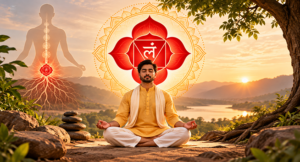
Traditional representations often depict the chakra as a lotus with four petals and associate it with the seed mantra LAM. Specific descriptions and practices can vary across yogic and Tantric lineages.
A Traditional Spiritual Framework
The chakra system belongs to a traditional spiritual and contemplative framework. It should not be confused with the anatomical nervous system, endocrine glands, or a physical structure that can currently be measured through standard medical tests.
Where Is the Muladhara Chakra Located?
Traditional descriptions place Muladhara at the base of the subtle-body system, commonly associated with the perineal region and the base of the spine.
This is a symbolic and contemplative location rather than an established anatomical organ. When meditating in this area, practitioners should remain comfortable and avoid creating unnecessary tension in the pelvic floor or lower back.
2. Why Is the Muladhara Chakra Important in Yogic Philosophy?
The root chakra is often presented as the foundation upon which further inner development takes place.
The underlying idea is straightforward: it can be difficult to maintain attention, emotional steadiness, or a regular meditation practice when a person feels overwhelmed, disconnected from bodily sensations, or constantly distracted.
Traditional yoga uses grounding as a way to cultivate steadiness before progressing towards subtler practices.
What Can Grounding Mean in Daily Life?
- Becoming aware of the feet and their contact with the floor.
- Developing strength and mobility for everyday movement.
- Learning to respond to stress without immediately reacting.
- Establishing a consistent sleep, movement, and meditation routine.
- Paying attention to the present rather than remaining absorbed in worries.
These practices do not require a person to accept every traditional explanation about chakras. They can be approached as physical training, breath awareness, and contemplative discipline.
The Relationship Between Grounding and the Body
Physical stability depends on several interacting systems, including muscular strength, joint function, vision, the vestibular system of the inner ear, and sensory information from the feet and joints.
Yoga postures that challenge balance can train aspects of coordination and postural control. Strengthening the legs and hips may also support everyday activities such as walking, climbing stairs, and standing from a chair.
These are observable physical functions and offer a practical way to explore the grounding theme associated with Muladhara.
3. What Does It Mean to Activate the Muladhara Chakra?
In traditional yoga practice, “activating” the Muladhara Chakra may refer to bringing attention to its symbolic location, working with its associated mantra, practicing grounding postures, or cultivating qualities such as steadiness and stability.
It is important to distinguish this spiritual meaning from a scientific claim.
Understanding the Scientific Limit
There is currently no established clinical test that confirms a chakra has been activated. Sensations such as warmth, tingling, vibration, emotional release, or a feeling of energy moving through the body do not independently prove chakra activation.
A balanced approach is to treat activation as a personal contemplative practice while observing changes that can be assessed more directly.
| Traditional Intention | Practical, Observable Goal |
|---|---|
| Grounding | Greater awareness of the feet and contact with the floor. |
| Stability | Better control during safe standing and balance exercises. |
| Strength | Improved ability to perform appropriate leg and hip exercises. |
| Calmness | A subjective reduction in tension after relaxation. |
| Awareness | Greater attention to breathing and bodily sensations. |
| Consistency | Maintaining a regular, sustainable yoga routine. |
These outcomes may be influenced by yoga, general exercise, sleep, health, and other lifestyle factors. They should not automatically be attributed to a chakra.
4. Scientific Perspective: How Can Grounding Practices Affect Health?
Although science has not established the chakra system as an anatomical system, research has investigated several physical and psychological outcomes associated with yoga.
4.1 Balance and Physical Mobility
A systematic review and meta-analysis published in Age and Ageing examined six studies involving 307 adults aged 60 and older. The researchers found small improvements in balance and moderate improvements in physical mobility following yoga-based exercise programs. The authors also noted that further research was needed to determine…
Continue this research paragraph in Part 4.
5. Best Yoga Asanas for Muladhara Chakra Grounding and Stability
The following postures are traditionally compatible with a grounding-focused practice. Their physical effects depend on correct technique, appropriate difficulty, and consistent practice.
5.1 Tadasana — Mountain Pose
Primary focus: Postural awareness, upright alignment, and grounding.
How to Practice
- Stand with the feet hip-width apart or comfortably together.
- Distribute your weight evenly across both feet.
- Keep the knees relaxed rather than forcefully locked.
- Lengthen the spine while allowing the shoulders to soften.
- Breathe naturally and notice the contact between your feet and the floor.
- Remain for 5–10 comfortable breaths.
Everyday example
A person who spends many hours sitting can use Tadasana as a brief posture-awareness break during the day.
Traditional connection: The posture is often used to cultivate steadiness and awareness of the body’s relationship with the ground.
5.2 Vrksasana — Tree Pose
Primary focus: Single-leg balance, coordination, and concentration.
How to Practice
- Stand near a wall or sturdy support.
- Shift your weight onto one foot.
- Place the other foot against the ankle or inner calf, avoiding direct pressure on the knee.
- Keep the hips comfortable and the gaze fixed on one point.
- Breathe normally and hold for 10–20 seconds if comfortable.
- Change sides.
Everyday example
A beginner who wobbles in Tree Pose can practice with wall support and gradually reduce assistance as balance improves.
Traditional connection: The posture symbolises rootedness while remaining upright and attentive.
5.3 Virabhadrasana I or II — Warrior Pose
Primary focus: Leg strength, postural control, and lower-body endurance.
How to Practice
- Take a comfortable, stable stance.
- Bend the front knee only as far as your mobility allows.
- Keep the knee tracking in the same general direction as the toes.
- Maintain a comfortable trunk position.
- Breathe steadily and avoid forcing the hips or back.
- Repeat on the other side.
Everyday example
Someone who finds climbing stairs tiring may use appropriately modified standing yoga postures as one part of a broader strength and mobility routine.
5.4 Malasana — Garland Pose
Primary focus: Hip and ankle mobility and comfortable squat positioning.
How to Practice
- Stand with the feet at a comfortable width.
- Lower into a squat only as far as your mobility permits.
- Use a block or folded blanket under the heels if appropriate.
- Keep the spine comfortable and avoid forcing the knees apart.
- Breathe gently for a few breaths, then rise slowly.
Everyday example
A beginner can practice a supported, partial squat rather than attempting a deep squat immediately.
5.5 Setu Bandhasana — Bridge Pose
Primary focus: Hip extension and activation of the gluteal and other supporting muscles.
How to Practice
- Lie on your back with your knees bent and feet on the floor.
- Position the feet comfortably, approximately hip-width apart.
- Press gently through the feet and lift the pelvis to a comfortable height.
- Keep the knees aligned and breathe normally.
- Lower the spine gradually.
Everyday example
A person who sits for long periods may include Bridge Pose in a programme intended to complement general hip and trunk strengthening.
Safety: Avoid forcing the lift or turning the head while the hips are elevated.
5.6 Balasana — Child’s Pose
Primary focus: Gentle rest, body awareness, and relaxation.
Kneel with the knees in a comfortable position and fold forward only as far as the hips, knees, and back allow. Support the torso or head with cushions if helpful.
Remain for several comfortable breaths without restricting breathing.
6. Which Pranayama Practices Support a Grounding Routine?
Pranayama is the yogic discipline of working with the breath. For a beginner-friendly grounding routine, start with practices that are gentle, comfortable, and free of forceful breath retention.
6.1 Diaphragmatic or Gentle Abdominal Breathing
Purpose: Develop awareness of breathing and encourage a comfortable respiratory rhythm.
Method
- Sit in a supported position or lie down.
- Place one hand on the abdomen if this helps you notice movement.
- Breathe gently through the nose if comfortable.
- Allow the abdomen to move naturally without pushing it outward.
- Exhale without squeezing or straining.
- Continue for 2–5 minutes.
6.2 Nadi Shodhana — Alternate Nostril Breathing
Purpose: Cultivate attention and a steady breathing rhythm within traditional pranayama practice.
Method
- Sit comfortably with the spine upright but relaxed.
- Close the right nostril gently and inhale through the left.
- Change sides and exhale through the right.
- Inhale through the right.
- Change sides and exhale through the left.
- Continue slowly for 2–5 minutes without breath retention.
6.3 Bhramari — Humming Bee Breath
Purpose: Support calm attention through gentle humming during exhalation.
Method
- Sit in a comfortable position.
- Inhale gently through the nose.
- Exhale with a soft, steady humming sound.
- Repeat 5–7 times, without straining the throat or extending the breath excessively.
- Sit quietly for a short period afterward.
What About Kapalabhati and Bhastrika?
These are more vigorous practices and are not necessary for a beginner’s grounding routine. They can cause dizziness or other problems when performed forcefully or inappropriately.
People with relevant medical conditions, including uncontrolled hypertension or certain cardiovascular or eye conditions, should seek individual clinical guidance before attempting vigorous pranayama. Pregnancy and recent surgery may also require modifications or avoidance.
For a gentle Muladhara-focused practice, natural breathing is sufficient.
7. Muladhara Chakra Meditation: A Simple Grounding Technique
Grounding meditation can be approached as a traditional contemplative exercise and a method of practising present-moment attention.
Choose a Comfortable Position
Sit on a chair or cushion with the body supported. You do not need to sit in Padmasana.
Notice the Contact Points
Bring attention to the feet touching the floor, the legs supported by the seat, and the hands resting comfortably.
Observe Natural Breathing
Notice the inhale and exhale without trying to control every breath.
Use a Traditional Visualisation if Desired
Some practitioners visualise a warm red light at the base of the subtle-body system. Treat this as an optional symbolic meditation, not a medical or anatomical event.
Repeat the Mantra LAM if Appropriate to Your Tradition
Repeat it softly or mentally at a comfortable pace. Mantra practice is a traditional spiritual method; its use does not demonstrate physical chakra activation.
Return Attention to the Present
Notice the room, the body’s contact with the ground, and the natural rhythm of breathing.
A Short Guided Meditation Script
Read slowly, or record these words in your own voice for personal practice.
Sit comfortably and allow your body to settle.
Notice the support beneath you. Feel your feet resting on the floor.
Allow your breathing to remain natural. There is no need to force or deepen it.
Bring your attention to the present moment. When thoughts arise, acknowledge them gently and return to the sensation of your feet touching the ground.
If it is meaningful to your practice, silently repeat the mantra LAM.
Rest in quiet awareness for a few moments.
When you are ready, open your eyes and return to your surroundings slowly.
8. A Practical 15-Minute Muladhara-Inspired Yoga Routine
This short sequence combines physical grounding, gentle breathing, and meditation. It is a general educational example, not a validated chakra-activation protocol.
Your 15-Minute Practice
A simple routine to adapt to your ability.
| Time | Practice | Main Intention |
|---|---|---|
| 2 min | Tadasana and awareness of the feet | Posture and grounding |
| 2 min | Gentle standing weight shifts | Balance and coordination |
| 3 min | Supported Tree Pose, both sides | Single-leg balance |
| 2 min | Gentle Bridge Pose or supported sit-to-stand | Hip and leg strength |
| 2 min | Comfortable natural or diaphragmatic breathing | Breath awareness |
| 4 min | Grounding meditation | Attention and relaxation |
| Total practice time: 15 minutes | ||
Practice at Your Own Pace
Adapt the duration and movements to your experience and physical ability. If you are new to yoga, practice with an instructor or use a chair or wall for support.
For broader fitness, combine yoga with regular walking and suitable strength-building activities.
9. How Can You Tell Whether Your Practice Is Helping?
Instead of relying only on unusual sensations or the expectation of chakra activation, look for practical changes over time.
You could keep a simple weekly practice journal and record:
Balance
Can you maintain a supported standing position with greater control?
Mobility
Are ordinary movements becoming more comfortable?
Strength
Can you perform an appropriate exercise with better technique?
Breathing
Can you practice without straining or holding your breath unnecessarily?
Attention
Can you return to your chosen meditation focus after distraction?
Consistency
Are you following a manageable routine regularly?
Subjective Well-Being
Do you feel more settled after practice? This is a personal observation, not proof of a specific biological mechanism.
10. Common Myths About the Muladhara Chakra
Myth 1: The root chakra is a physical organ.
Fact: It is a concept in traditional subtle-body philosophy, not an anatomical organ recognised by modern medicine.
Myth 2: Tingling or heat proves that the chakra has activated.
Fact: These sensations can have many explanations and are not a validated test of chakra activation.
Myth 3: One asana can permanently activate the root chakra.
Fact: There is no established scientific protocol that demonstrates permanent chakra activation. Postures can be selected to develop physical skills and support a contemplative routine.
Myth 4: Pranayama guarantees the removal of fear, financial insecurity, or illness.
Fact: Breathing and meditation may be useful components of well-being, but they cannot guarantee external security or replace appropriate medical, psychological, or financial support.
Myth 5: More intense practice produces better results.
Fact: Forceful breathing, extreme postures, and prolonged breath retention can be harmful. A safe and sustainable practice is preferable.
11. Muladhara Chakra and the Navratri Worship of Bala Tripura Sundari
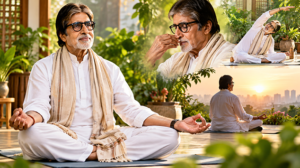
The accompanying Yogalaya Vedic greeting celebrates Navratri Day 1 and Bala Tripura Sundari Maa, presenting themes of divine grace, purity, happiness, and inner strength.
For readers who follow this devotional tradition, the image can serve as an invitation to combine prayer, self-discipline, mindful movement, and reflection.
The symbolism of Bala Tripura Sundari belongs to a broader Hindu spiritual context, while the Muladhara Chakra belongs to yogic and Tantric subtle-body traditions. These traditions may be explored together in personal practice, but they should not be presented as identical concepts or as a scientifically proven one-to-one relationship.
A respectful daily practice might include a short prayer, gentle asanas, comfortable breathing, and quiet meditation. Devotion can provide personal meaning, while physical and psychological outcomes should be described carefully and honestly.
12. Who Should Practice These Techniques?
Gentle grounding practices can be adapted for many healthy adults, but no single routine is appropriate for everyone.
Beginners
Start with Tadasana, supported standing, natural breathing, and short meditation.
Students and Working Professionals
Use brief movement breaks and comfortable breathing to interrupt long periods of sitting.
Older Adults
Prioritise supported balance, safe transitions, and appropriate strength exercises.
People with Knee, Hip, Back, or Balance Problems
Choose modified postures with professional guidance.
People with Medical Conditions
Seek individual advice when symptoms, mobility limitations, or prescribed treatment may affect exercise safety.
Frequently Asked Questions
1. What is the Muladhara Chakra?
Muladhara is traditionally described as the root chakra and is associated with grounding, stability, and foundational awareness in yogic philosophy.
2. How can I activate the Muladhara Chakra?
Within traditional practice, people may use grounding asanas, mantra, visualisation, meditation, and mindful breathing. Scientifically, there is no established test or validated method for confirming chakra activation.
3. Which asana is best for Muladhara Chakra practice?
Tadasana is a useful starting point for awareness of posture and the feet. Supported Tree Pose can add a balance challenge, while suitable Warrior Pose variations and Bridge Pose can complement a broader strength routine.
4. Which pranayama is suitable for beginners?
Gentle natural breathing, comfortable diaphragmatic breathing, and beginner-level alternate nostril breathing without retention are reasonable options. Technique and individual health matter more than intensity.
5. Can Muladhara meditation reduce stress?
Meditation may help some people manage stress and practice attention, but the response varies. Any benefit should not be attributed automatically to chakra activation.
6. How long should I meditate?
Start with 5 minutes and extend the duration gradually if comfortable. Regular, manageable sessions are often easier to maintain than demanding routines.
7. Can yoga balance exercises prevent falls?
Yoga may improve some aspects of balance and physical function, but research does not establish that every yoga programme prevents falls. People at high risk of falling may need a tailored balance and strength programme.
8. Is the Muladhara Chakra scientifically proven?
The chakra system is part of traditional yogic philosophy, not an established anatomical system. Some practices associated with grounding have been studied for physical and psychological outcomes, but those findings do not prove that chakras are measurable energy centres.
Conclusion
The Muladhara Chakra offers a traditional framework for reflecting on grounding, stability, and the relationship between body and mind. Its symbolism can inspire a disciplined approach to yoga, meditation, and everyday living.
From a scientific perspective, the most useful approach is to focus on outcomes that can be observed and assessed: balance, strength, mobility, breathing comfort, attention, and personal well-being. Gentle asanas, appropriate pranayama, and grounding meditation can be combined into a sustainable routine, with modifications for individual needs.
There is no need to force unusual sensations or make promises about miraculous healing. Consistency, safe technique, self-awareness, and a balanced lifestyle provide a more reliable foundation for practice.
At Yogalaya Vedic, the study of traditional wisdom can be accompanied by scientific curiosity, respect for individual experience, and responsible health education.
Scientific References
-
Tiedemann A, et al. (2016). Yoga-based exercise improves balance and mobility in people aged 60 and over: a systematic review and meta-analysis.
Age and Ageing.
Read the publication -
Baker G, et al. (2019). The effects of yoga compared to active and inactive controls on physical function and health related quality of life in older adults: systematic review and meta-analysis of randomized controlled trials.
International Journal of Behavioral Nutrition and Physical Activity.
Read the full text -
Bajaj P, et al. (2025). Effect of yoga on balance, falls, and bone metabolism: a systematic review of randomized controlled trials in healthy individuals.
Osteoporosis International.
Read the publication