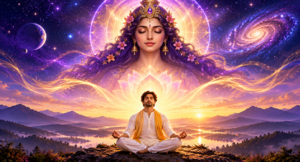
The Power of the Universal Mother: Awakening Inner Energy Through Yoga and Cosmic Consciousness
YOGALAYA VEDIC · YOGA & SPIRITUALITY
The Power of the Universal Mother: Awakening Inner Energy Through Yoga and Cosmic Consciousness
Explore the spiritual significance of Navaratri’s ninth day through the symbolism of the Universal Mother, yogic wisdom, mantra japa, mindful breathing, and meditation.
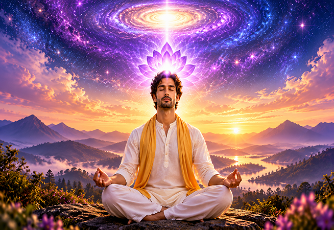
Human beings have always looked beyond the visible world to understand the source of life, energy, consciousness, and existence. Across spiritual traditions, the universe has been described through different ideas: universal energy, creative consciousness, the cosmic source, and the nurturing principle that sustains life.
The concept of the Universal Mother can be understood as a symbolic expression of this all-embracing, life-supporting energy. It represents creation, nourishment, transformation, compassion, and the interconnectedness of all living beings.
Navaratri, traditionally observed as a period of reflection, discipline, and spiritual practice, offers an opportunity to explore these ideas more deeply. Its ninth day can serve as a reminder of the completion of a period of inner practice—not simply as an ending, but as an invitation to carry greater awareness into everyday life.
At Yogalaya Vedic, yoga can be approached as a practical path for exploring this inner dimension. Through asanas, pranayama, meditation, and self-reflection, practitioners can develop a steadier mind, a more conscious relationship with the breath, and a deeper appreciation of life’s interconnectedness.
The purpose is not to force a mystical experience or adopt a particular religious belief. It is to create the conditions for stillness, clarity, compassion, and a more meaningful connection with oneself and the world.
The journey toward cosmic consciousness begins with a simple step: becoming fully aware of the life within us.
Key Takeaways
Explore the central ideas behind the Universal Mother and how yoga can translate spiritual reflection into everyday practice.
Universal Mother
The Universal Mother can be understood as a symbol of the creative, nurturing, and sustaining energy of existence.
Yoga and Awareness
Yoga provides a practical framework for developing body awareness, mental steadiness, and inner balance.
Conscious Breathing
Pranayama encourages conscious breathing and can support relaxation and attention.
Meditation
Meditation helps practitioners observe thoughts and emotions without immediately reacting to them.
Spiritual Fulfilment
Spiritual fulfilment can mean living with greater wisdom, humility, compassion, and self-awareness rather than seeking extraordinary powers.
Consistent Practice
Consistent practice is generally more valuable than seeking dramatic or immediate experiences.
Spirituality and Science
Spiritual interpretations of cosmic energy should be distinguished from scientific explanations of physical energy.
Understanding the Universal Mother: The Source of Nurturing and Creative Energy
The phrase Universal Mother carries a powerful symbolic meaning. It points toward the qualities associated with the source of life: nurturing, creation, protection, renewal, and the capacity to sustain growth.
In yogic and broader Indian spiritual philosophy, the feminine principle is sometimes associated with Shakti, a Sanskrit term commonly understood as power, energy, or the dynamic force of manifestation. Interpretations differ among philosophical and spiritual traditions, so this concept need not be understood in only one way.
For a contemporary yoga practitioner, Universal Mother energy may be explored through three complementary perspectives.
The Creative Principle
Nature is constantly creating and renewing. Seeds grow into plants, seasons change, and living systems adapt. The Universal Mother can symbolically represent this continuous movement of creation and renewal.
The Nurturing Principle
Life depends on nourishment, care, connection, and balance. The symbolic image of a universal mother reminds us to cultivate these qualities in our relationship with ourselves, other people, and the natural world.
The Inner Principle
The idea can also invite personal reflection. Are we nurturing our physical health? Are we feeding the mind with constructive thoughts? Are we making space for stillness, gratitude, and compassion?
Traditional Symbolism and Spiritual Significance
Across different traditions, the source of existence has been described through symbols of light, space, breath, water, earth, and creative energy. These symbols provide ways to contemplate experiences that are difficult to express through ordinary language.
In the context of yoga, the Universal Mother may be contemplated through the following themes.
Creation and Renewal
Every breath offers a fresh moment of awareness. Every practice gives us another opportunity to begin again. Renewal does not require dramatic change; it may begin with one conscious decision.
Interconnectedness
The body depends on air, water, food, relationships, and the environment. Reflecting on these connections can encourage gratitude and responsibility toward the world around us.
Compassion and Acceptance
A nurturing attitude includes the ability to recognize our limitations without giving up on growth. Yoga invites us to practice with patience rather than force.
Transformation Through Awareness
Yoga does not require us to reject ordinary life in search of a special experience. Instead, it can help us meet ordinary situations with greater awareness, steadiness, and care.
Stillness and the Cosmic Perspective
Looking at the night sky or observing the natural world can remind us that human life is part of a much larger universe. Meditation offers a quiet setting in which to reflect on that relationship.
Inner Energy, Wisdom, and Spiritual Fulfilment
What Does It Mean to Awaken Inner Energy?
In everyday language, we may describe ourselves as energetic, exhausted, focused, distracted, calm, or overwhelmed. In yogic traditions, discussions of subtle energy offer another way of exploring the relationship between body, breath, attention, and awareness.
These traditional descriptions are not identical to the physical energy measured by science. However, yoga and meditation offer practical methods for noticing bodily sensations, breathing patterns, emotions, and mental habits.
Inner Energy
For practical purposes, inner energy can refer to our felt sense of vitality, motivation, and readiness to engage with life. Sleep, nutrition, movement, stress, and emotional well-being can all affect this experience.
Wisdom
Wisdom involves more than gathering information. It includes recognizing our habits, considering the consequences of our choices, listening carefully, and responding thoughtfully rather than impulsively.
Spiritual Fulfilment
Spiritual fulfilment need not mean reaching a permanent state of bliss. It may involve developing a clearer sense of purpose, living according to meaningful values, and becoming more compassionate toward ourselves and others.
Cosmic Consciousness
The phrase cosmic consciousness is used in spiritual and philosophical contexts to describe an expanded sense of connection with existence. People interpret this idea differently. For some, it is a contemplative experience; for others, it is a metaphor for recognizing humanity’s place within nature and the universe.
A gentle reminder: No special experience is required to benefit from yoga. Consistent practice can be meaningful even when the mind remains busy or meditation feels ordinary.
Mantra Japa and the Power of Sound
Mantra practice is a traditional way of directing attention through the repetition of a sound, word, or phrase. For some practitioners, mantras have devotional significance; for others, repetition provides a focus for concentration and contemplation.
For this article’s universal approach, practitioners may use Om (Aum), a sacred sound in several Indian spiritual traditions, or a simple reflective phrase such as:
May I live with awareness, compassion, and balance.
A Reflective Mantra for Daily Practice
How to Practise Mantra Japa
- Choose a quiet place. Sit comfortably where you can practise without unnecessary interruptions.
- Find a natural posture. Keep the spine naturally upright without becoming rigid.
- Settle your gaze. Close the eyes gently, if comfortable, or lower the gaze.
- Breathe naturally. Take several unforced breaths without trying to control every inhalation or exhalation.
- Begin the repetition. Repeat your chosen mantra softly, aloud, or mentally.
- Return without judgement. When thoughts arise, notice them and return to the repetition without self-criticism.
- Start with a few minutes. Continue for three to five minutes initially, adjusting the duration to your comfort.
- Finish with awareness. Sit quietly for a moment and notice how you feel before returning to your activities.
Practice with balance: There is no need to force a particular sensation or believe that a mantra guarantees supernatural results. The practice is an opportunity to cultivate attention, steadiness, and reflection.
Prefer Silence?
If sound repetition is uncomfortable, practise silent breath awareness instead. Notice the natural movement of your breathing and gently return your attention whenever your mind wanders.
Yoga Asanas for Inner Balance and Cosmic Awareness
Yoga asanas can prepare the body for breathing practices and meditation by encouraging mobility, balance, physical awareness, and a comfortable seated position.
Practise within your current ability. Move slowly, breathe naturally, and stop if you experience sharp pain, dizziness, or unusual discomfort. The affirmations below are optional reflections rather than promises of specific outcomes.
Asana 1: Tadasana — Mountain Pose
Purpose
To develop awareness of posture, grounding, and balance.
Steps
- Stand with your feet together or comfortably hip-width apart.
- Distribute your weight evenly across both feet.
- Keep your knees relaxed rather than locked.
- Lengthen the spine gently and allow the shoulders to soften.
- Let the arms rest naturally by your sides.
- Breathe comfortably for five to ten breaths.
- Notice the contact between your feet and the ground.
“I am grounded, steady, and present.”
Modification: If standing balance is difficult, stand near a wall or sturdy chair for support.
Asana 2: Sukhasana — Easy Seated Pose
Purpose
To establish a comfortable position for breath awareness and meditation.
Steps
- Sit on a mat with your legs comfortably crossed.
- Place a folded blanket or cushion beneath the hips if needed.
- Rest your hands on your thighs or knees.
- Allow the spine to lengthen naturally.
- Relax the jaw, face, and shoulders.
- Breathe normally and notice the movement of the abdomen or chest.
- Remain for one to three minutes, increasing the duration as comfortable.
“I create space for stillness and clarity.”
Modification: Sit on a chair with both feet resting on the floor if crossing your legs is uncomfortable.
Asana 3: Balasana — Child’s Pose
Purpose
To offer a quiet resting posture and encourage gentle inward attention.
Steps
- Begin on your hands and knees.
- Bring the big toes toward each other and separate the knees to a comfortable width.
- Slowly move the hips backward toward the heels.
- Lower the torso forward as far as comfortable.
- Rest the forehead on a cushion or folded arms if needed.
- Keep the arms extended forward or relaxed beside the body.
- Take five to eight comfortable breaths before returning slowly.
“I allow myself to rest, soften, and begin again.”
Modification: Place a cushion beneath the torso or head. Skip this pose if kneeling or forward folding aggravates your knees, hips, or back.
Asana 4: Bhujangasana — Cobra Pose
Purpose
To introduce gentle spinal extension and encourage awareness of the chest and breath.
Steps
- Lie on your abdomen with your legs extended comfortably behind you.
- Place the palms near the lower ribs.
- Keep the elbows close to the body.
- Inhale and gently lift the head and upper chest using the back muscles, with light support from the hands.
- Keep the shoulders away from the ears.
- Lift only as high as feels comfortable; the pelvis and legs remain grounded.
- Hold for two to five breaths, then lower slowly.
“I meet each new moment with openness and courage.”
Modification: Keep the lift very low. Avoid forcing the lower back into a deep arch, and skip the pose if it causes pain.
Asana 5: Marjaryasana–Bitilasana — Cat–Cow Pose
Purpose
To coordinate movement with breathing and develop awareness of spinal mobility.
Steps
- Begin on hands and knees, with wrists approximately beneath shoulders and knees beneath hips.
- Inhale and gently move the chest forward while allowing the abdomen to soften for Cow Pose.
- Exhale and round the spine gently toward the ceiling for Cat Pose.
- Let the head follow the movement without straining the neck.
- Continue slowly for five to eight rounds.
- Keep the movement comfortable and coordinated with your own breathing rhythm.
“I move with awareness and adapt with ease.”
Modification: Place a folded blanket beneath the knees or perform smaller movements if the wrists or back are sensitive.
Asana 6: Vrikshasana — Tree Pose
Purpose
To practise balance, concentration, and patient attention.
Steps
- Stand tall with your weight distributed evenly across both feet.
- Shift your weight onto one leg while keeping the standing knee soft.
- Place the other foot against the inner ankle, calf, or thigh, avoiding direct pressure on the knee.
- Keep your gaze fixed on a steady point.
- Bring the palms together at the chest if balance allows.
- Breathe naturally for three to five breaths.
- Return to standing and repeat on the other side.
“I remain steady while life continues to change.”
Modification: Keep the raised toes on the floor like a kickstand or hold a wall or chair.
Asana 7: Setu Bandhasana — Bridge Pose
Purpose
To practise controlled movement of the hips and spine while maintaining comfortable breathing.
Steps
- Lie on your back with knees bent and feet hip-width apart.
- Place the arms beside the body with palms facing down.
- Keep the feet planted comfortably.
- Inhale and gently lift the hips without pushing into pain.
- Keep the neck relaxed and avoid turning the head while lifted.
- Hold for three to five comfortable breaths.
- Lower the spine slowly, one part at a time.
“I build strength with patience and care.”
Modification: Lift the hips only a small distance. If the pose is uncomfortable, remain lying down and practise slow, natural breathing instead.
Asana 8: Shavasana — Corpse Pose
Purpose
To allow quiet rest and observe the effects of practice.
Steps
- Lie on your back in a comfortable position.
- Let the legs rest naturally apart and the arms settle beside the body.
- Use a pillow beneath the head or knees if helpful.
- Close the eyes if comfortable.
- Notice the natural rhythm of your breath without trying to change it.
- Relax the face, hands, shoulders, and legs gradually.
- Remain for three to five minutes, then move gently before sitting up.
“I allow myself to rest in awareness.”
Modification: Lie on your side or sit in a supportive chair if lying flat is uncomfortable.
Pranayama and Guided Meditation
Pranayama is a traditional yogic approach to working consciously with the breath. For a gentle daily practice, begin with natural breathing and gradually develop awareness before attempting advanced techniques.
Practice 1: Natural Breath Awareness
- Sit or lie in a comfortable position.
- Notice where the breath is easiest to feel: the nostrils, chest, or abdomen.
- Observe the inhale and exhale without forcing either one.
- If the mind wanders, gently return attention to the next breath.
- Continue for two to five minutes.
Practice 2: Gentle Lengthened Exhalation
- Sit comfortably and breathe normally for a few cycles.
- Allow the next inhale to remain easy and unforced.
- If comfortable, let the exhale last slightly longer than the inhale.
- Do not hold the breath or strain to achieve a particular count.
- Continue for one to three minutes.
- Return to normal breathing if you feel dizzy, breathless, or uncomfortable.
Guided Meditation: Connecting with Universal Mother Energy
Set aside five to ten minutes in a quiet place.
Step 1 — Settle
Sit comfortably and allow the body to become still without becoming rigid.
Step 2 — Notice the Breath
Observe the natural movement of breathing. There is no need to change it.
Step 3 — Feel Supported
Notice the surface beneath you and the physical support it provides. Let this simple sensation represent steadiness and care.
Step 4 — Reflect on Nature
Bring to mind the air you breathe, the water you drink, the food that nourishes you, and the natural world that supports life.
Step 5 — Contemplate the Universal Mother
If this concept is meaningful to you, reflect on it as a symbol of creation, nourishment, compassion, and the interconnectedness of existence. You do not need to visualise a figure or experience a particular sensation.
Step 6 — Extend Compassion
Silently offer a simple wish:
May I be peaceful. May others be safe. May I act with kindness.
Step 7 — Return Gently
Notice your surroundings, move your hands and feet, and open your eyes when ready.
Affirmations for Wisdom, Compassion, and Inner Growth
Affirmations are short phrases used to direct attention toward chosen values. They work best as reminders for reflection and action rather than as guarantees that particular outcomes will occur.
Choose one or two that feel genuine:
A Daily Sadhana Routine
Sadhana commonly refers to a regular spiritual or contemplative practice. A sustainable routine does not need to be long or complicated.
A 20-Minute Daily Routine
| Duration | Practice | Intention |
|---|---|---|
| 2 minutes | Sit quietly and settle | Arrive in the present moment |
| 5 minutes | Gentle asanas | Develop body awareness |
| 3 minutes | Natural breath awareness | Steady attention |
| 5 minutes | Meditation or mantra repetition | Cultivate stillness |
| 3 minutes | Reflection or affirmation | Clarify values |
| 2 minutes | Gratitude and closing | Carry awareness into daily life |
You can adapt this schedule to your energy, experience, and available time.
A Simple Morning Practice
Begin with a glass of water, a few comfortable movements, and several moments of conscious breathing. Choose an intention for the day, such as patience, clarity, or kindness.
An Evening Reflection
Before sleep, pause and ask yourself:
- When did I feel most present today?
- What challenged my patience?
- What am I grateful for?
- What is one thing I can approach differently tomorrow?
The goal is not perfection. It is to make awareness a regular part of daily life.
Benefits of Yoga, Meditation, and Self-Reflection
Regular yoga and meditation may support several aspects of well-being, although individual experiences vary and outcomes depend on the practice, the person, and the wider circumstances of their life.
Greater Body Awareness
Asana practice encourages attention to posture, movement, balance, and physical sensations.
Relaxation and Stress Management
Gentle movement, comfortable breathing, and meditation may help some people manage stress and develop relaxation skills.
Improved Attention
Returning attention to the breath or a chosen phrase provides an opportunity to practise noticing distraction and refocusing.
Emotional Self-Awareness
Quiet reflection can help practitioners notice emotional patterns and create a pause before responding.
Physical Mobility and Balance
Appropriate yoga practices may support flexibility, strength, mobility, and balance. The effects depend on the poses, consistency, and individual needs.
A Stronger Sense of Purpose
Reflecting on compassion, gratitude, and interconnectedness may help people clarify the values they wish to express through their actions.
A More Thoughtful Relationship with Nature
Contemplating the Universal Mother as a symbol of life-sustaining nature can encourage gratitude and environmentally responsible choices.
Inspirational Reflection and Practice Reminder
Let your breath bring you into the present, your awareness guide your choices, and your compassion shape the way you meet the world.
Use this reflection as a reminder rather than a promise of spiritual attainment.
The deepest value of practice may not be a dramatic experience during meditation. It may be the patience you show during a difficult conversation, the care you give your body, the attention you bring to your work, or the kindness you offer someone who needs it.
Conclusion: Living with Universal Awareness
The Power of the Universal Mother is a way of reflecting on the nurturing, creative, and sustaining dimensions of existence. Through this perspective, the natural world becomes a reminder of interdependence, while yoga offers a practical opportunity to develop attention, steadiness, and compassion.
Asanas help us explore movement and posture. Pranayama encourages a more conscious relationship with breathing. Meditation creates space to observe the mind. Self-reflection helps translate insight into everyday conduct.
Navaratri’s ninth day can be used as a symbolic moment of completion and renewal: a chance to reflect on what a period of practice has taught us and how those lessons can continue beyond the celebration.
You do not need to chase extraordinary experiences or force yourself to believe something that does not feel authentic. Begin with the breath. Notice your thoughts. Treat yourself and others with care. Return to your practice patiently.
The journey toward universal awareness begins with the life you are living right now.
Common Misconceptions About Universal Energy and Yoga
Misconception 1: Universal Mother Energy Must Be Understood Through a Particular Religion
The concept can be approached through religious, philosophical, symbolic, or personal perspectives. Readers can explore the theme of nurturing and creative energy without adopting a specific belief system.
Misconception 2: Awakening Inner Energy Means Experiencing Unusual Sensations
Warmth, tingling, emotional changes, or vivid imagery are not required signs of progress. Focus on safe practice, steadiness, and everyday well-being.
Misconception 3: Meditation Requires Stopping All Thoughts
Thoughts naturally arise. Meditation can involve noticing them and gently returning attention to the breath, sound, or chosen focus.
Misconception 4: Longer Practice Always Produces Better Results
A brief, consistent, comfortable routine may be more sustainable than a demanding practice that causes strain or is quickly abandoned.
Misconception 5: Cosmic Energy Is the Same as Scientific Physical Energy
Spiritual language about cosmic or universal energy is not automatically equivalent to measurable physical energy. These ideas should be discussed in their appropriate contexts.
Frequently Asked Questions
Explore common questions about Universal Mother energy, yoga, meditation practices, spiritual awareness, and the scientific perspective.
1. What Is Universal Mother Energy?
Universal Mother energy is a spiritual or symbolic concept representing the nurturing, creative, and life-sustaining qualities associated with existence. Interpretations vary across traditions and individuals.
2. Can Yoga Help Awaken Inner Energy?
Yoga can help develop body awareness, movement, breathing awareness, and concentration. Some practitioners interpret these experiences through the language of subtle or inner energy, while others use a more practical well-being framework.
3. Which Yoga Poses Are Suitable for Beginners?
Tadasana, supported Sukhasana, gentle Cat–Cow movements, and a comfortable relaxation pose can be suitable starting points for many beginners. Choose modifications that fit your mobility and health needs.
4. How Long Should I Meditate Each Day?
You can begin with three to five minutes and increase gradually if it feels comfortable. Consistency is generally more useful than forcing a long session.
5. What Is the Connection Between Breath and the Mind?
Breathing and mental states can influence one another. Slow, comfortable breathing may support relaxation for some people, while breath awareness provides a focus for attention. Avoid forceful breathing or prolonged breath retention without appropriate instruction.
6. Is Cosmic Consciousness a Scientific Concept?
The term is used in spiritual and philosophical discussions, but it does not have one universally accepted scientific definition. Personal experiences of connection should be distinguished from experimentally established claims about consciousness and the universe.
7. Can I Practise Without Following a Religious Tradition?
Yes. Many people approach yoga through movement, breathing, attention, and self-reflection. You can explore the symbolic meaning of Universal Mother energy in a way that respects your own beliefs.
8. What Is the Best Time to Practise?
Choose a time you can maintain comfortably. Morning practice suits some people, while others prefer the evening. Adapt the routine to your schedule and physical needs.
Scientific Context: What Can We Say with Confidence?
Yoga, breathing practices, and meditation have been studied for their potential effects on stress, mood, attention, and physical functioning. Findings vary according to the intervention, study design, and participant population.
It is reasonable to discuss these practices as possible tools for relaxation, self-awareness, and well-being. It is not appropriate to claim that they scientifically prove the existence of a measurable Universal Mother force, guarantee awakening, or produce supernatural abilities.
Similarly, Shakti, subtle energy, and cosmic consciousness belong to philosophical or spiritual frameworks whose meanings depend on the tradition and context. They may be personally meaningful without being identical to concepts used in physics or neuroscience.
Begin Your Yoga Journey with Yogalaya Vedic
Your journey toward greater awareness does not have to be complicated. With consistent practice, yoga can become a space to reconnect with your body, observe your mind, and develop a more conscious relationship with life.
At Yogalaya Vedic, explore traditional yoga practices that bring together asanas, pranayama, meditation, and mind training.
Whether you are just beginning or deepening an established practice, take the next step at a pace that supports your well-being.
YOUR PRACTICE. YOUR JOURNEY.
Begin Your Yoga Journey with Yogalaya Vedic
Explore traditional yoga practices that bring together asanas, pranayama, meditation, and mind training.
For beginners through advanced practitioners.
Explore Yogalaya Vedic