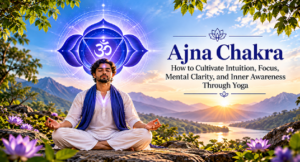
Ajna Chakra: How to Cultivate Intuition, Focus, Mental Clarity, and Inner Awareness Through Yoga
Ajna Chakra: How to Cultivate Intuition, Focus, Mental Clarity, and Inner Awareness Through Yoga
Discover the Power of Inner Awareness
Have you ever noticed how easily the mind can move from one thought to another? One moment, we are focused on an important task; the next, we find ourselves thinking about the past, worrying about the future, or becoming distracted by our surroundings. In such moments, the ability to pause, observe, and return our attention to the present becomes valuable.
In traditional yogic philosophy, the Ajna Chakra, commonly known as the third eye chakra, is associated with inner awareness, concentration, discernment, and insight. It invites us to look beyond immediate reactions, observe our thought patterns, and approach life with greater clarity.
Yoga provides a practical path for cultivating these qualities. Through asanas, pranayama, mantra chanting, meditation, and positive affirmations, practitioners can train their attention, develop patience, and become more aware of the relationship between thoughts, emotions, and actions.
At Yogalaya Vedic, Ajna Chakra sadhana is an opportunity to deepen the connection between yoga practice and everyday living. It encourages us to move from distraction towards attention, from impulsive reactions towards thoughtful responses, and from habitual thinking towards conscious reflection.
The journey of inner awareness begins when we learn to observe the mind instead of being carried away by every thought.
Key Takeaways
Understand the traditional meaning and symbolism of Ajna Chakra.
Learn its traditional bija mantra, OM (ॐ).
Explore suitable yoga asanas for a steady, comfortable meditation posture.
Practice pranayama and meditation to cultivate attention and awareness.
Use affirmations after every asana, pranayama practice, and meditation.
Develop concentration, thoughtful decision-making, and self-awareness through consistent sadhana.
What Is Ajna Chakra?

Ajna Chakra is traditionally described as the sixth of the seven principal chakras in many presentations of the yogic chakra system. The Sanskrit word “ajna” is commonly translated in relation to command, guidance, or instruction.
It is symbolically associated with the area between the eyebrows and is connected in traditional teachings with concentration, inner observation, discernment, and intuitive insight.
Ajna Chakra practice encourages us to become more conscious of how we think, interpret experiences, and make decisions. Instead of accepting every thought as fact or reacting immediately to every emotion, we can learn to observe, reflect, and respond with greater awareness.
Reflect on Your Inner Awareness
- Can I maintain my attention on one task without frequently becoming distracted?
- Do I observe my thoughts before accepting them as true?
- Can I distinguish between an immediate emotional reaction and a considered decision?
- Do I make time for silence, reflection, and self-understanding?
- Can I remain open to new information when my assumptions are challenged?
These reflections make Ajna Chakra practice relevant to students, teachers, professionals, parents, meditation practitioners, and anyone seeking to develop greater self-awareness.
Traditional Symbolism of Ajna Chakra
| Sanskrit name | Ajna |
|---|---|
| Chakra number | Sixth |
| Symbolic location | Between the eyebrows |
| Bija mantra | OM (ॐ) |
| Lotus | Two petals |
| Common modern color association | Indigo |
| Traditional symbolism | Inner awareness, concentration, discernment, and insight |
Specific symbolic details may vary among traditions. The chakra system belongs to traditional yogic subtle-body philosophy; the Ajna Chakra is not an established anatomical structure, and its symbolism should be understood within that context.
Why Is Ajna Chakra Important in Yoga?
Our attention influences how we learn, how we interpret situations, and how we respond to life’s challenges. Ajna-focused sadhana offers a traditional framework for developing greater awareness of these processes.
Concentration and Focus
Concentration allows us to direct our attention towards a chosen task, mantra, breath, or intention. Returning the mind to a single point of focus is a central practice in many forms of meditation.
I gently bring my attention back to what matters most.
Mental Clarity
When thoughts accumulate, it can become difficult to see a situation clearly. Pausing, breathing, and reflecting can help us organize our thoughts and consider our options more carefully.
I create space for clear thinking and thoughtful decisions.
Intuition and Discernment
In traditional yogic understanding, the Ajna Chakra is associated with inner insight. In everyday life, discernment also involves examining evidence, learning from experience, recognizing assumptions, and considering consequences.
I listen to my inner awareness while using wisdom and discernment.
Emotional Awareness
By observing thoughts and feelings during meditation, practitioners can practice recognizing their internal responses before acting on them. This awareness can create an opportunity to choose a more constructive response.
I observe my thoughts and emotions with patience and respond with awareness.
Self-Knowledge and Personal Growth
Self-reflection helps us recognize recurring patterns, understand our intentions, and identify the qualities we want to develop through practice.
I learn from each experience and grow through conscious self-reflection.
Ajna Chakra Mantra
OM (AUM)
A sacred mantra widely used in yogic chanting and meditation.
OM, also written as AUM, is a sacred syllable used in several Indian spiritual traditions. In many contemporary chakra practices, it is associated with Ajna Chakra meditation.
Practitioners may chant OM aloud, repeat it softly, or recite it mentally while maintaining a comfortable, steady posture.
How to Practice OM Mantra Japa
- Sit comfortably with the spine naturally upright.
- Relax the forehead, jaw, shoulders, and facial muscles.
- Take a few gentle, natural breaths.
- Chant OM at a comfortable pitch and volume, allowing the sound to end naturally.
- Alternatively, repeat the mantra mentally while maintaining attention.
- Begin with 9 or 11 repetitions, then sit quietly for a few moments.
Avoid straining the voice or forcing the breath. The practice should feel comfortable and sustainable.
Affirmation after mantra japa: With every repetition, I return to awareness, clarity, and inner stillness.
Practice Intention
Allow the mantra to become an anchor for your attention. Whenever the mind wanders, gently return to OM without criticizing yourself. Each return is an opportunity to practice concentration.
Practitioners may experience peace, devotion, mental quietness, emotional responses, or personal sensations during sadhana. Welcome meaningful experiences with gratitude, while allowing your practice to remain steady even when experiences vary.
Best Yoga Asanas for Ajna Chakra Practice
The following asanas can help prepare the body for pranayama and meditation. They emphasize comfortable posture, gentle movement, relaxation of unnecessary tension, and awareness of the breath.
Their inclusion in an Ajna-focused sequence reflects their role in preparing for concentration and meditation; the poses themselves should not be understood as scientifically established methods of activating a chakra.
Balasana (Child’s Pose)
Balasana is a resting posture that can help practitioners slow down and turn their attention inward. It may be included between more active movements or before seated meditation.
How to Practice
- Kneel on the mat with your knees comfortably apart or together.
- Slowly lower your hips towards your heels, using a cushion if needed.
- Extend your arms forward or rest them alongside your body.
- Support your forehead on the mat or a folded blanket.
- Breathe naturally for a few comfortable breaths, then return slowly.
Affirmation after the asana: I give my mind permission to pause, settle, and become aware.
Practice Intention
Notice the rhythm of your breath and allow unnecessary muscular tension to soften. Let the posture remind you that clarity often begins with taking a moment to pause.
Sukhasana (Easy Pose)
Sukhasana provides a comfortable seated position for breath awareness, mantra japa, and meditation. A cushion beneath the hips can make sitting more comfortable.
How to Practice
- Sit cross-legged on a cushion, or sit on a chair with your feet supported.
- Lengthen the spine naturally without stiffening it.
- Rest the hands on the thighs.
- Relax the shoulders, forehead, and jaw.
- Allow your breathing to settle before continuing.
Affirmation after the asana: I sit with steadiness, observe with patience, and welcome clarity.
Practice Intention
Notice when the mind begins to wander. Rather than forcing it to become still, gently return your attention to your posture and breathing.
Tadasana (Mountain Pose)
Tadasana develops awareness of standing posture, balance, and body alignment. It offers a simple opportunity to practise attention while remaining physically grounded.
How to Practice
- Stand with your feet comfortably placed and your weight distributed evenly.
- Keep your knees soft rather than locked.
- Lengthen the spine naturally and relax the shoulders.
- Let the arms rest by your sides.
- Breathe naturally and notice the contact of your feet with the floor.
Affirmation after the asana: I remain grounded in the present and clear in my intentions.
Practice Intention
Bring your attention to the sensations of standing. When your mind moves to the past or future, gently return to the present moment.
Marjaryasana–Bitilasana (Cat–Cow Pose)
Cat–Cow coordinates spinal movement with breathing. It can help practitioners transition from physical activity towards slower, more attentive practice.
How to Practice
- Begin on your hands and knees, with wrists beneath shoulders and knees beneath hips.
- Inhale and gently lengthen the spine, opening the chest without forcing the neck.
- Exhale and round the spine comfortably.
- Continue for 5–8 slow cycles, coordinating movement with natural breathing.
- Return to a neutral spine and pause.
Affirmation after the asana: I remain flexible in my thinking and open to new understanding.
Practice Intention
Let each movement remind you that awareness includes the ability to adjust, learn, and see a situation from more than one perspective.
Adho Mukha Svanasana (Downward-Facing Dog)
The downward-facing dog is a familiar yoga posture that engages several muscle groups and stretches the back of the body. It can be included when appropriate to the practitioner’s ability and overall sequence.
How to Practice
- Begin on your hands and knees.
- Spread the fingers and press through the hands.
- Lift the hips upwards and backwards, keeping the knees bent if needed.
- Allow the head to remain relaxed between the upper arms.
- Breathe comfortably, then bend the knees and return to the starting position.
Affirmation after the asana: I approach each challenge with patience, awareness, and a willingness to learn.
Practice Intention
Focus on the relationship between effort and ease. There is no need to force the heels towards the floor or achieve a particular shape.
Safety reminder: Choose another comfortable posture if this pose causes wrist, shoulder, back, or head discomfort, or if your health circumstances make it unsuitable.
Viparita Karani (Legs-Up-the-Wall Pose)
This supported restorative posture can provide a quiet transition into relaxation or meditation. It is optional and should feel comfortable rather than strenuous.
How to Practice
- Sit sideways beside a wall.
- Carefully turn onto your back and bring your legs up the wall, adjusting your distance for comfort.
- Keep the back and head supported comfortably.
- Rest your arms by your sides and breathe naturally.
- Stay briefly, then bend your knees and turn onto your side before sitting up slowly.
Affirmation after the asana: I allow myself to slow down, restore my attention, and return to the present.
Practice Intention
Let the stillness help you recognize the value of rest. A focused mind also benefits from periods when it is not required to solve, plan, or analyze.
After each pose, pause for one or two natural breaths and repeat the affirmation with attention. The purpose is to integrate body awareness and mind training—not to rush through postures or force an unusual experience.
Pranayama for Ajna Chakra
Pranayama is an important part of a balanced yoga practice. Gentle breathing practices provide opportunities to observe the breath, settle attention, and prepare for meditation.
For Ajna-focused sadhana, the emphasis is on comfort, awareness, and steadiness. Avoid forceful breathing or prolonged breath retention unless you have appropriate training and guidance.
Nadi Shodhana (Alternate Nostril Breathing)
Nadi Shodhana is a traditional pranayama technique that alternates the breath between the nostrils. It is often practised before meditation as an opportunity to direct attention towards a steady breathing rhythm.
How to Practise
- Sit comfortably with your spine upright.
- Bring your right hand into a comfortable position for gently closing one nostril at a time.
- Close the right nostril and inhale softly through the left.
- Close the left nostril, release the right, and exhale through the right.
- Inhale through the right, then exhale through the left.
- Continue for 3–5 gentle rounds without breath retention.
Affirmation after pranayama: I gather my attention gently and direct it towards what matters.
Practice Intention
Observe how your attention follows the breathing sequence. Whenever it wanders, return to the next breath with patience. Practice the same gentle redirection when you become distracted. during everyday tasks.
Bhramari Pranayama (Humming Bee Breath)
Bhramari involves producing a soft humming sound during exhalation. It offers an opportunity to direct attention towards sound, breathing, and the quiet moment that follows.
How to Practise
- Sit comfortably and relax your face and shoulders.
- Inhale naturally through the nose.
- Exhale slowly while producing a gentle humming sound.
- Notice the sound without straining the throat or forcing the breath.
- Repeat up to five times, then sit quietly and breathe normally.
Safety reminder: There is no need to press on your eyes or ears. Stop if you feel dizzy or uncomfortable.
Affirmation after pranayama: I release unnecessary mental tension and return to the present with awareness.
Practice Intention
Listen to the sound as it begins, continues, and fades. Allow this simple observation to remind you that you can notice a thought without needing to follow it.
Ujjayi Pranayama (Victorious Breath)
Ujjayi is a traditional breathing technique that uses a gentle narrowing of the throat to create a soft breath sound. It is practiced in some yoga traditions as part of asana and breathing practice.
How to Practice
- Sit comfortably and begin with natural breathing.
- Gently narrow the passage at the back of the throat to create a soft sound.
- Keep the inhalation and exhalation smooth and comfortable.
- Continue briefly without forcing the breath.
- Release the technique and return to natural breathing.
Safety reminder: If you are new to Ujjayi, learn it from a qualified yoga teacher. Do not tighten the throat or strain to produce a sound.
Affirmation after pranayama: I remain steady in challenging moments and choose my responses with awareness.
Practice Intention
Use the rhythm of your breath as a reminder to pause before making an important decision. A moment of awareness can help you consider your options more thoughtfully.
Natural Diaphragmatic Breathing
Natural diaphragmatic breathing encourages awareness of the abdomen and lower ribs as they move with the breath. It is an accessible practice for beginners and experienced practitioners.
How to Practice
- Sit or lie in a comfortable position.
- Place one hand on the abdomen if it helps you notice the movement.
- Inhale gently through the nose, allowing the abdomen to expand naturally.
- Exhale comfortably without pushing the air out.
- Continue for 1–3 minutes, then return to your usual breathing pattern.
Affirmation after pranayama: I give myself space to observe, reflect, and choose wisely.
Practice Intention
Notice the difference between immediately reacting to a thought and taking time to consider it. Let the breath become a reminder to respond thoughtfully.
Finish each breathing technique by returning to normal breathing before repeating the affirmation. The goal is to cultivate awareness and steadiness, not to force a special sensation or achieve a particular breathing duration.
Ajna Chakra Meditation
Meditation is a central practice for developing concentration and self-awareness. In traditional Ajna Chakra meditation, practitioners may focus on the space between the eyebrows, repeat OM, and observe the movements of the mind.
The practice below combines these traditional elements with affirmations designed to encourage concentration, discernment, and thoughtful action.
Guided Ajna Chakra Meditation
Settle the Body
Sit in a comfortable position. Keep your spine naturally upright, relax your shoulders, and soften your forehead and jaw.
I am present, steady, and ready to turn my attention inward.
Observe the Breath
Allow your breathing to remain natural. Notice the inhalation and exhalation without trying to change them.
With every breath, I gently return to the present moment.
Bring Gentle Awareness to the Space Between the Eyebrows
If comfortable, bring your attention towards the space between your eyebrows. Keep your eyes relaxed and avoid squeezing them together or straining to create a sensation. You may imagine a soft indigo light as a symbolic meditation focus.
I observe with patience and welcome greater clarity in my understanding.
Practice OM Mantra Chanting
Silently or softly repeat OM at a comfortable pace. Allow the mantra to become an anchor for your attention.
My attention becomes steadier as I return to my practice with patience.
Observe Your Thoughts
Notice thoughts as they arise. You do not need to suppress them, judge them, or follow every thought into another story. Gently return your attention to the mantra or breath.
I can observe a thought without accepting it as the whole truth.
Reflect with Discernment
Bring to mind a decision or situation that requires thoughtful consideration. Ask yourself what you know, what you are assuming, and what further understanding may be helpful.
I combine inner awareness, clear thinking, and wise discernment in my decisions.
Rest in Silence
Release the mantra and sit quietly for a few moments. Allow thoughts and emotions to come and go without demanding a particular experience.
I welcome stillness, learn from experience, and allow understanding to deepen.
Close the Meditation
Take a few comfortable breaths, gently open your eyes, and choose one quality you wish to carry into your day.
I cultivate clarity in my thoughts, awareness in my choices, and wisdom in my actions.
Beginners can start with 5 minutes and gradually work towards 10–15 minutes as comfortable. A short, consistent practice is a useful starting point.
Some practitioners may experience peace, mental quietness, emotional responses, or subtle sensations. Others may notice ordinary thoughts and distractions throughout the session. Both are common experiences in meditation. Practice without forcing a particular sensation or interpreting it as a compulsory sign of chakra activation.
Ajna Chakra Affirmations for Daily Mind Training
Affirmations can help direct our attention towards qualities we wish to develop. When repeated with understanding and connected to everyday action, they can serve as reminders to practise concentration, discernment, and self-awareness.
Concentration and Focus
- I gently return my attention to the task before me.
- I give my attention to what matters most.
- I practice patience when my mind becomes distracted.
- I create space for stillness and focused awareness.
Clarity and Discernment
- I observe my thoughts before accepting them as true.
- I consider facts, perspectives, and consequences before making decisions.
- I remain open to learning and correcting my assumptions.
- I combine intuition with thoughtful reflection and sound judgement.
Emotional Awareness and Inner Growth
- I recognize my emotions and choose my responses consciously.
- I learn from my experiences without judging myself harshly.
- I make time for self-reflection and meaningful silence.
- Through regular yoga and meditation, I cultivate awareness, patience, and inner clarity.
How to Practice Affirmations Effectively
- Choose one or two affirmations that relate to your current intention.
- Repeat each slowly and understand the meaning behind the words.
- Visualize a realistic situation in which you can put the affirmation into practice.
- Observe your thoughts and emotions without demanding that they immediately change.
- Take one practical action that reflects the affirmation.
If you repeat “I observe my thoughts before accepting them as true,” practice checking the facts before reaching a conclusion or making an important decision.
The Mind-Training Connection
Affirmations can help us direct attention towards chosen intentions. Thoughts, emotions, and behaviour influence one another, and the way we interpret a situation can shape our emotional response and subsequent actions.
Notice your interpretations and assumptions.
Recognize the feelings associated with a situation.
Choose a response that reflects your values.
The goal is not to eliminate every negative thought or force yourself to feel positive at all times. It is to notice your patterns, question unhelpful assumptions, and practice responses that align with your values.
Daily Ajna Chakra Sadhana Routine
You can begin with a manageable routine that combines movement, breathing, mantra, meditation, and mind training. The following sequence takes approximately 18 minutes.
Gentle Warm-Up
2 minRelax the shoulders, mobilize the spine gently, and find a comfortable posture.
I prepare my body and mind with awareness.
Asana Practice
5 minChoose two or three suitable postures, focusing on alignment, comfort, and awareness.
I remain grounded in the present and clear in my intentions.
Pranayama
4 minPractice gentle Nadi Shodhana, or natural diaphragmatic breathing.
I gather my attention and return to the present.
OM Mantra and Meditation
5 minRepeat OM comfortably, observe your thoughts, and return to your chosen focus.
I observe with patience and choose with discernment.
Daily Intention
2 minChoose one affirmation and identify one practical way to apply it today.
Today, I act with awareness and make thoughtful choices.
Adjust the routine according to your experience, available time, and comfort. Beginners may start with a shorter session and gradually develop consistency.
Bringing Ajna Chakra Practice into Daily Life
The value of yoga extends beyond the time spent on the mat. The awareness developed through practice can become part of how we learn, work, communicate, and make decisions.
At Work
Focus on one priority at a time and pause before making important decisions.
During Studies
Use short periods of focused attention and return to the task when distractions arise.
In Relationships
Notice emotional reactions before responding, and try to understand another person’s perspective.
When Facing Uncertainty
Distinguish what you know from what you assume, and seek additional information when needed.
During Emotional Situations
Acknowledge your feelings without treating every immediate interpretation as fact.
In Personal Reflection
Review your choices with honesty and use mistakes as opportunities to learn.
Daily Affirmation I observe carefully, think clearly, and take actions that reflect awareness and wisdom.
Benefits of Ajna-Focused Yoga Practice
A routine combining yoga, breathing, meditation, and self-reflection can support several valuable personal-development goals.
Improved Body Awareness
Gentle asanas can help practitioners notice posture, movement, and physical tension while preparing for seated practice.
Attention and Concentration
Returning attention to the breath or mantra provides repeated opportunities to practice focusing and redirecting the mind.
Thoughtful Responses
Mindfulness can encourage practitioners to notice thoughts and emotions before reacting, creating space for more considered choices.
Self-Reflection and Discernment
Journaling, meditation, and affirmations can support reflection on habits, assumptions, intentions, and personal values.
Self-Discipline
A regular sadhana routine offers a structured way to practise consistency, patience, and commitment.
These are potential benefits of the practices involved, rather than guaranteed outcomes of chakra activation. Individual experiences vary, and no particular sensation is required to make a practice worthwhile.
Inspirational Quote for Ajna Chakra
“When the mind becomes quiet, awareness grows clearer, understanding deepens, and every conscious choice becomes an opportunity for wisdom.”
Practice Reminder: Let Awareness Guide Your Sadhana
Every asana, every breath, every mantra, and every moment of meditation offers an opportunity to observe your mind and deepen your self-awareness.
Welcome meaningful experiences with gratitude, and do not become discouraged when your mind wanders or your practice feels ordinary. Each time you return to your chosen focus, you have another opportunity to practice patience and concentration.
Choose affirmations that reflect the qualities you wish to cultivate. Repeat them with sincerity, understand their meaning, and express them through your everyday choices.
Conclusion: Let Inner Awareness Become Your Strength
Ajna Chakra invites us to explore an essential aspect of yoga: the ability to observe our thoughts, understand our responses, and approach life with greater awareness.
Through asanas, pranayama, OM mantra japa, meditation, and meaningful affirmations, we can create a regular sadhana that encourages concentration, self-reflection, and thoughtful decision-making.
Remember that progress is not measured only by what you experience during meditation. It can also be reflected in how patiently you approach challenges, how carefully you consider information, how consciously you respond to emotions, and how willing you are to learn.
At Yogalaya Vedic, we encourage practitioners to approach their sadhana with dedication, openness, and consistency. Begin with simple practices, remain patient with yourself, and allow each session to become an opportunity for growth.
Begin Your Yoga Journey with Yogalaya Vedic
Explore traditional yoga practices that bring together asanas, pranayama, meditation, and mind training.
For beginners through advanced practitioners.
Explore Yogalaya VedicCommon Misconceptions About Ajna Chakra
Ajna Chakra Is Only About Supernatural Intuition
Traditional teachings associate it with inner insight and awareness. In daily life, discernment also involves learning, observing evidence, questioning assumptions, and considering consequences.
A Practitioner Must Feel Pressure or Vibration Between the Eyebrows
No particular sensation is required. Some practitioners report sensations or emotional responses; others may not. A sensation alone does not establish that a chakra has been activated.
Meditation Means Stopping Every Thought
Thoughts naturally arise during meditation. The practice involves noticing when attention wanders and gently returning to the chosen focus.
Affirmations Automatically Change the Mind
Affirmations can remind us of our intentions, but meaningful development also involves awareness, practice, and action.
Intuition Should Always Be Followed Without Question
Inner impressions can be valuable prompts for reflection, but they are not infallible. Important decisions benefit from considering facts, alternative explanations, and possible consequences.
Frequently Asked Questions
Explore common questions about Ajna Chakra, its traditional symbolism, and ways to include meditation and mindful yoga in your routine.
1. What is Ajna Chakra?
Ajna Chakra is traditionally described as the sixth principal chakra and is associated with the space between the eyebrows, concentration, inner awareness, and discernment.
2. What is the mantra for Ajna Chakra?
OM (ॐ), also written as AUM, is widely used in yogic chanting and meditation and is commonly associated with Ajna Chakra in contemporary chakra practices.
3. Which color is associated with the Ajna Chakra?
Indigo is a common modern color association, although symbolic details vary among traditions.
4. Which asanas are suitable for Ajna-focused practice?
Balasana, Sukhasana, Tadasana, Marjaryasana–Bitilasana, and suitable variations of Downward-Facing Dog can form part of a session that prepares the body for concentration and meditation.
5. Which pranayama practices can I include?
Gentle Nadi Shodhana, Bhramari, natural diaphragmatic breathing, and appropriately taught Ujjayi can complement a meditation routine.
6. Which affirmations are suitable for Ajna Chakra?
Try: “I observe my thoughts before accepting them as true,” or “I create space for clear thinking and thoughtful decisions.” Choose an affirmation that reflects the quality you wish to practise.
7. How long should I meditate?
Beginners can start with 5 minutes and gradually work towards 10–15 minutes as comfortable. Regular practice is a useful starting point.
8. Must I feel a sensation between my eyebrows?
No. Practitioners’ experiences differ, and a particular sensation is not necessary for meaningful sadhana.
9. Can Ajna Chakra practice improve concentration?
Breath awareness, mantra repetition, and meditation provide opportunities to practice directing attention. Results vary, and concentration can also be developed through consistent practice in everyday tasks.
10. Does Ajna Chakra represent intuition?
In traditional yogic philosophy, the Ajna Chakra is associated with inner insight and discernment. This spiritual symbolism does not mean that every intuitive impression is necessarily correct.
11. Can beginners practice Ajna Chakra meditation?
Yes. Beginners can start with a comfortable seated position, natural breathing, a few repetitions of OM, and a simple affirmation. There is no need to force attention at the forehead.
12. What is the main purpose of Ajna Chakra sadhana?
Within traditional yogic philosophy, Ajna Chakra sadhana offers a path for reflecting on concentration, inner awareness, and discernment. Its practical value can be cultivated through consistent practice and conscious application in daily life.
Scientific Understanding and Traditional Yogic Wisdom
In certain yogic traditions, the awakening of Ajna Chakra is understood through disciplined spiritual practice, inner experience, and guidance from an experienced guru. Some traditions describe changes in inner perception, awareness, insight, or consciousness as aspects of spiritual development.
A qualified teacher within a particular lineage may help a practitioner interpret these experiences according to its teachings. However, experiences differ between individuals, and no single sensation or visual experience can be treated as a universal sign of Ajna Chakra awakening.
From a modern scientific perspective, such experiences can be studied as subjective reports and changes associated with meditation, but science has not established a validated method for confirming subtle-body perception or Ajna Chakra activation.
For a Balanced Approach
- Respect the traditional spiritual meaning of Ajna Chakra.
- Welcome personal experiences without forcing a particular result.
- Combine affirmations with reflection, learning, and practical action.
- Evaluate progress through everyday qualities such as concentration, patience, discernment, and self-awareness.