Anahata Chakra: How to Cultivate Love, Compassion, Emotional Balance, and Inner Harmony Through Yoga – Yogalayavedic
Home › Yoga Blog › Anahata Chakra: How to Cultivate Love, Compassion, Emotional Balance, and Inner Harmony Through Yoga
Anahata Chakra, Meaning, Mantra, Benefits and Yoga

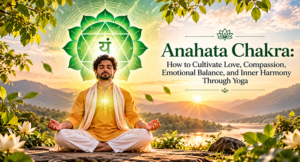
Anahata Chakra: How to Cultivate Love, Compassion, Emotional Balance, and Inner Harmony Through Yoga

Anahata Chakra: How to Cultivate Love, Compassion, Emotional Balance, and Inner Harmony Through Yoga

Anahata Chakra: How to Cultivate Love, Compassion, Emotional Balance, and Inner Harmony Through Yoga

Discover the traditional meaning of Anahata Chakra, its symbolism, YAM mantra, yoga asanas, pranayama, meditation practices, and ways to cultivate compassion and inner harmony in everyday life.

Discover the Wisdom of the Anahata Chakra

Have you ever noticed how a few moments of peaceful breathing, a sincere act of kindness, or a quiet meditation can change the way you experience your day?

Traditional yogic philosophy invites us to explore this inner dimension through Anahata Chakra, commonly known as the Heart Chakra. It is associated with love, compassion, kindness, emotional harmony, and awareness of our relationships with ourselves and others.

The Sanskrit word Anahata is commonly translated as “unstruck.” In yogic traditions, it is also associated with the subtle, unstruck sound contemplated through spiritual practice.

Anahata is traditionally described as the fourth chakra in the seven-chakra system, situated in the heart region of the subtle body. Its symbolism encourages us to cultivate compassion, practice gratitude, maintain self-respect, and approach life’s experiences with greater awareness.

At Yogalaya Vedic, yoga is understood as more than physical exercise. It is a holistic discipline that brings together yogasanas, pranayama, meditation, concentration, and self-awareness.

Exploring Anahata Chakra gives us an opportunity to bring these practices into everyday life. Through regular practice, we can work towards a more mindful relationship with our thoughts, actions, and interactions.

You do not need to achieve a special experience in a single session. Begin with a comfortable posture, breathe naturally, observe your thoughts, and practice with sincerity. Let each session become an opportunity to learn, grow, and develop consistency.

1. What Is Anahata Chakra?

Anahata Chakra is the fourth of the seven principal chakras described in many traditional and contemporary presentations of yogic philosophy.

Within this spiritual framework, the chakras are subtle centers used to understand aspects of meditation, inner awareness, and spiritual development. They are not established anatomical structures identified by modern medical science.

Anahata is traditionally associated with the heart region and symbolically represents the development of qualities such as compassion, kindness, balance, and connection.

Its teachings invite us to reflect on important questions:

  • Can I respond to difficult situations with greater patience?
  • Can I show kindness while maintaining healthy boundaries?
  • Can I appreciate others without constantly comparing myself with them?
  • Can I treat myself with the same understanding that I offer others?
  • Can I make time for yoga, breathing, and meditation in my daily routine?

These questions make the traditional teachings of Anahata meaningful in contemporary life.

Why Is Anahata Called the Heart Chakra?

The heart is widely recognized as a symbol of love, affection, courage, and connection. In the traditional chakra system, Anahata uses this symbolism to represent qualities associated with compassion, awareness, and harmony.

The purpose of studying this chakra is not simply to memorize its characteristics. It is to apply its teachings through reflection and practice.

When we practice yoga with awareness, we create opportunities to observe our reactions, pay attention to our breathing, and respond to daily experiences more thoughtfully.

2. Anahata Chakra: Traditional Symbolism and Significance

Anahata Chakra has a rich symbolic description in traditional yogic and Tantric literature.

Association Traditional Description
Sanskrit Name अनाहत चक्र
English Name Heart Chakra
Chakra Sequence Fourth principal chakra
Traditional Location Heart region of the subtle body
Element Air — वायु तत्त्व
Seed Mantra YAM — यं
Lotus Petals Twelve
Geometric Symbol Two interlocking triangles forming a hexagram
Contemporary Color Association Green
Central Themes Love, compassion, awareness, and harmony

These associations belong to a traditional spiritual framework. Descriptions and interpretations may differ across historical texts, lineages, and modern teaching systems.

The Twelve-Petalled Lotus

The twelve-petalled lotus is one of the best-known symbols of Anahata Chakra.

In spiritual symbolism, the lotus is often used to represent unfolding awareness and inner development. Its twelve petals form an important part of traditional descriptions of this chakra.

For a yoga practitioner, the lotus can serve as a reminder that personal growth takes time. Patience, discipline, and self-awareness develop through continued effort rather than through a single experience.

The Air Element — Vayu Tattva

Anahata Chakra is traditionally associated with the air element.

Air is symbolically connected with movement, openness, and spaciousness. This association can inspire practitioners to pay attention to their breathing and cultivate a more open, balanced approach to daily experiences.

Gentle pranayama and mindful movement offer practical ways to explore these ideas.

The Hexagram

Traditional descriptions of Anahata include two interlocking triangles that form a six-pointed figure.

Some contemporary interpretations understand this symbol as representing the integration of complementary principles. Interpretations vary and should be considered within the particular tradition in which they are taught.

The Color Green

Green is widely associated with the Heart Chakra in contemporary chakra imagery.

It is often used to represent nature, growth, renewal, and harmony. Although green is a familiar modern association, descriptions may differ among historical sources and yogic lineages.

3. Anahata Chakra Mantra: YAM — यं

The traditional seed mantra associated with Anahata Chakra is YAM (यं).

A seed mantra, or Bija Mantra, is a sacred syllable used in particular spiritual and meditative traditions. Practitioners may repeat it aloud, chant it softly, or mentally repeat it during meditation.

Anahata Chakra Mantra

Sanskrit: यं

Transliteration: Yaṃ

Common English Rendering: YAM

How to Practise YAM Mantra Meditation

  1. Sit comfortably on a yoga mat or cushion.
  2. Keep your spine naturally upright without creating tension.
  3. Close your eyes gently if you feel comfortable doing so.
  4. Allow your breathing to become slow and natural.
  5. Repeat “YAM” softly or mentally repeat “यं” with focused attention.
  6. Notice the sound and rhythm without forcing any physical sensation.
  7. When your attention wanders, return gently to the mantra.
  8. Continue for three to five minutes, or for a duration appropriate to your experience.

Finish by sitting quietly for a few moments and observing your breathing.

Practice Reminder: Positive emotions, inner peace, or subtle sensations during Anahata Chakra sadhana can inspire you to deepen your practice. Welcome these experiences with gratitude, but do not force them or compare your journey with others. Continue your sadhana with faith, patience, and dedication, allowing your practice to deepen naturally.

4. Best Yoga Asanas for Anahata Chakra

Gentle chest-opening and shoulder-mobility practices are commonly included in contemporary yoga routines inspired by Heart Chakra symbolism.

The purpose is to develop comfortable movement, postural awareness, and mindful breathing rather than to force the chest open or achieve a particular energetic sensation.

4.1 Bhujangasana — Cobra Pose

Sanskrit: भुजंगासन

Bhujangasana is a prone backbend that encourages spinal extension and movement through the front of the body.

How to Practise

  1. Lie on your abdomen with your legs extended comfortably.
  2. Place your palms beside your chest.
  3. Keep your elbows close to your body.
  4. Inhale and gently lift your head and chest, using your back muscles and light assistance from your hands.
  5. Keep your shoulders relaxed and avoid compressing your lower back.
  6. Hold briefly while breathing naturally.
  7. Exhale and return slowly to the starting position.

Repeat two or three times according to your comfort.

Practice Intention: Develop postural awareness, gentle chest opening, and steady breathing.

4.2 Matsyasana — Fish Pose

Sanskrit: मत्स्यासन

Matsyasana is a traditional backbend practised in different variations. Some versions require considerable neck and shoulder mobility.

Beginners should learn a suitable variation from a qualified instructor rather than forcing the head or neck into position.

Practice Intention: Explore comfortable chest expansion and awareness of the front of the body.

4.3 Setu Bandhasana — Bridge Pose

Sanskrit: सेतु बन्धासन

The bridge pose involves lifting the pelvis while lying on the back. It can help practitioners develop awareness of the hips, legs, and spinal position.

How to Practise

  1. Lie on your back with your knees bent and feet resting on the floor.
  2. Place your arms beside your body.
  3. Press your feet gently into the floor.
  4. Lift your pelvis to a comfortable height without straining.
  5. Keep your neck neutral and breathe naturally.
  6. Lower your spine slowly.

Repeat two or three times.

Practice Intention: Combine controlled movement with steady breathing and body awareness.

4.4 Anahatasana — Heart-Melting Pose

Anahatasana is a kneeling posture in which the chest moves towards the floor while the hips remain above the knees.

How to Practise

  1. Begin on your hands and knees.
  2. Keep your hips approximately above your knees.
  3. Slowly walk your hands forward.
  4. Lower your chest towards the mat only as far as comfortable.
  5. Keep your neck relaxed and breathe naturally.
  6. Return slowly to the starting position.

Use a cushion or reduce the depth of the stretch when needed.

Practice Intention: Explore a gentle stretch through the shoulders and upper body while maintaining relaxed breathing.

4.5 Gomukhasana Arms — Cow Face Pose Arms

Sanskrit: गोमुखासन

The arm position from Gomukhasana can be practised separately to explore shoulder mobility.

Bring one arm overhead and bend the elbow while the other arm moves behind your back. Use a strap or towel between the hands if they cannot comfortably meet.

Practise both sides without pulling the arms forcefully.

Practice Intention: Develop shoulder awareness and a comfortable range of movement.

4.6 Sukhasana — Comfortable Seated Pose

Sanskrit: सुखासन

Sukhasana provides a comfortable position for pranayama, mantra repetition, and meditation.

Sit on a cushion if needed, allow your spine to lengthen naturally, and relax your shoulders. Rest your hands on your thighs or knees.

Practice Intention: Establish a steady and comfortable foundation for inner awareness.

Suggested Asana Sequence

Beginners can start with gentle shoulder rotations, comfortable spinal movements, one or two suitable chest-opening asanas, and a seated posture for breathing.

Practise Safely: Practise slowly and stop any movement that causes pain, dizziness, or unusual discomfort. Advanced backbends are not necessary for a meaningful yoga routine.

5. Pranayama Practices for Anahata Chakra

Pranayama refers to traditional yogic breathing practices. For a routine inspired by Anahata Chakra, gentle breathing methods can be combined with comfortable posture and attentive observation.

5.1 Nadi Shodhana — Alternate Nostril Breathing

Sanskrit: नाड़ी शोधन प्राणायाम

Nadi Shodhana is a traditional breathing practice involving alternate use of the nostrils.

How to Practise

  1. Sit comfortably with your back upright.
  2. Relax your shoulders and facial muscles.
  3. Close the right nostril gently.
  4. Inhale comfortably through the left nostril.
  5. Close the left nostril and exhale through the right.
  6. Inhale through the right nostril.
  7. Close the right nostril and exhale through the left.
  8. Continue at a gentle, comfortable pace.

Begin with a few rounds and increase gradually according to your comfort.

Practice Safely: Do not force the breath or hold it for extended periods. Beginners can learn the technique from a qualified yoga teacher.

5.2 Gentle Diaphragmatic Breathing

This exercise encourages awareness of the movement of the abdomen and lower rib cage.

How to Practise

  1. Sit or lie in a comfortable position.
  2. Place one hand on your abdomen if helpful.
  3. Breathe in gently through your nose.
  4. Allow your abdomen to expand naturally.
  5. Exhale without pushing the air out forcefully.
  6. Continue for two to five minutes.

There is no need to take unusually deep breaths. Comfortable, unforced breathing is the priority.

5.3 Bhramari Pranayama — Humming Bee Breath

Sanskrit: भ्रामरी प्राणायाम

Bhramari involves producing a gentle humming sound during exhalation.

How to Practise

  1. Sit comfortably with your eyes closed if you prefer.
  2. Inhale gently through your nose.
  3. Exhale slowly while making a soft humming sound.
  4. Keep the sound comfortable and unforced.
  5. Pause briefly before the next natural inhalation.
  6. Repeat three to five rounds.

This practice can be included as a quiet transition into meditation.

Practice Safely: Stop if you feel dizzy or uncomfortable. People with relevant medical concerns should seek appropriate professional guidance before beginning unfamiliar breathing exercises.

6. Anahata Chakra Meditation

Meditation provides an opportunity to cultivate attention, observe thoughts, and develop a more deliberate relationship with inner experience.

Anahata-inspired meditation uses traditional themes of compassion, kindness, and harmony as a focus for reflection.

Step-by-Step Heart-Centred Meditation

Step 1: Prepare Your Posture

Sit on a chair, cushion, or yoga mat. Choose a position you can maintain comfortably.

Step 2: Settle Your Breathing

Allow the breath to flow naturally. Notice each inhalation and exhalation without trying to control every movement.

Step 3: Bring Attention to the Heart Region

Gently direct your attention towards the centre of your chest. There is no need to imagine that a physical structure is opening or changing.

Step 4: Repeat the YAM Mantra

If appropriate for your tradition, repeat “YAM” or “यं” silently or softly.

Step 5: Reflect on Compassion

Bring to mind a simple intention:

  • May I act with kindness.
  • May I listen with patience.
  • May I respect myself and others.
  • May I respond to life’s challenges with greater awareness.

Step 6: Return to Silence

Release the words and sit quietly for a few moments.

Step 7: Close the Practice

Open your eyes gently and carry one practical intention into your day.

Suggested Duration: Start with five minutes and gradually extend your practice if comfortable.

7. Inspirational Quote: The Wisdom of Anahata Chakra

“When the heart becomes a space for compassion, the mind discovers peace, and every conscious action becomes an expression of inner harmony.”

— Yogalaya Vedic

Anahata Chakra invites us to understand that compassion is not limited to words or feelings. It can be expressed through patience, sincere listening, gratitude, and thoughtful action.

Every day provides an opportunity to practice these qualities. A kind word, a moment of understanding, or a decision to respond calmly can become part of a more mindful way of living.

Through yoga and meditation, we can create time to reflect on our actions and make conscious efforts to bring greater harmony into our relationships.

8. Anahata Chakra Affirmations

Affirmations are positive statements that can be repeated during meditation or quiet reflection. Practise them with sincerity and a willingness to apply their meaning in daily life.

Daily Heart Chakra Affirmations

  1. I cultivate love, kindness, and compassion in my daily life.
  2. I treat myself with patience, respect, and understanding.
  3. I welcome peace and harmony into my thoughts and actions.
  4. I listen to others with an open mind and a compassionate heart.
  5. I express kindness while maintaining healthy boundaries.
  6. I practice gratitude for the people and experiences that enrich my life.
  7. I choose thoughtful responses instead of reacting without awareness.
  8. I nurture inner harmony through regular yoga, pranayama, and meditation.
  9. I allow myself to grow through awareness, discipline, and self-reflection.
  10. I bring compassion, balance, and positive intention into each new day.

How to Practice Anahata Affirmations

  1. Sit comfortably in Sukhasana or on a chair.
  2. Relax your shoulders and breathe naturally.
  3. Choose three affirmations that resonate with you.
  4. Repeat each statement silently or aloud.
  5. Reflect on one practical way to apply each statement during the day.
  6. Finish with a few moments of quiet awareness.

Suggested duration: Practise for two to five minutes after your asanas or pranayama.

Positive affirmations shape our thoughts and beliefs, influencing our emotions, words, and actions. Practiced with awareness, faith, and sincerity, they encourage positive thinking and constructive emotional responses.

9. A Simple Daily Anahata Chakra Yoga Routine

Consistency matters more than attempting an advanced practice immediately.

The following routine is a general example for adults who can comfortably perform these activities.

Practice Suggested Duration
Comfortable sitting and settling 2 minutes
Gentle neck and shoulder movements 3 minutes
Suitable chest-opening asanas 5 minutes
Comfortable breathing practice 3 minutes
YAM mantra meditation 3 minutes
Affirmations and silent reflection 2 minutes
Total 18 minutes

Adjust the routine according to your experience, mobility, and personal needs. A shorter practice is a good starting point if you are new to yoga.

Morning and evening can both be suitable times, provided the practice fits your schedule and remains comfortable.

Remember: The most important step is to begin at an appropriate level and build a regular routine.

10. How to Apply Anahata Teachings in Everyday Life

A yoga practice becomes more meaningful when its intentions are carried into ordinary activities.

Cultivate Compassion

Recognize that people have different experiences, challenges, and perspectives. Listen carefully and avoid rushing to judgment.

Develop Self-Respect

Kindness does not mean accepting every situation or agreeing with everyone. Practise communicating respectfully and maintaining appropriate boundaries.

Practice Gratitude

At the end of each day, reflect on three things you appreciate. They may be simple moments, such as a peaceful morning, a helpful conversation, or an opportunity to practice yoga.

Build Patience

Yoga teaches us to work within our present abilities while continuing to improve. Apply the same attitude to relationships, learning, and personal goals.

Strengthen Awareness

Mindful attention can help us notice our reactions and listen more carefully to others. Make space for reflection before responding to challenging situations.

These habits offer practical ways to apply the symbolism of Anahata without assuming that a particular emotional experience proves a chakra has been activated.

11. Benefits of Regular Yoga Practice

Practise with faith, awareness, and guidance, welcoming personal experiences while recognising that modern science continues to explore the relationship between mind, body, and well-being.

The US National Center for Complementary and Integrative Health notes that research suggests yoga may support aspects of stress management, mental and emotional well-being, sleep, and balance. Outcomes vary according to the practice, participants, and quality of the research.

A consistent, appropriately adapted yoga routine may help practitioners work towards the following goals.

Greater Body Awareness

Asanas encourage attention to posture, movement, muscular effort, and physical sensations.

Mindful Breathing

Breathing practices offer a structured opportunity to pay attention to the breath and practice slowing down when appropriate.

Stress Management

Yoga can be one component of a broader approach to managing everyday stress. It is not a replacement for necessary medical or mental health care.

Consistent Self-Care

Setting aside time for practice can help establish a regular wellness routine.

Thoughtful Daily Responses

Meditation and self-reflection provide opportunities to notice reactions and consider how to respond more deliberately.

12. Traditional Yogic Wisdom and Scientific Understanding

Traditional yogic philosophy and modern scientific research approach human experience in different ways.

Traditional Understanding

Anahata Chakra is a subtle center associated with the heart region, the air element, a twelve-petalled lotus, the YAM mantra, and themes of compassion and harmony.

Scientific Understanding

Modern research can investigate practices such as asanas, breathing exercises, and meditation by measuring outcomes such as perceived stress, balance, sleep, or aspects of psychological well-being.

For generations, accomplished yogic masters have explored Anahata Chakra through dedicated sadhana and transmitted their experiential knowledge to sincere, eligible students.

Their teachings, preserved in traditional texts and guru–shishya lineages, offer a valuable perspective on chakra sadhana, while modern scientific research continues to investigate the relationship between yoga, meditation, and human well-being.

A balanced approach: Continue your Anahata Sadhana with faith, dedication, and an open heart; welcome every meaningful experience as encouragement to deepen your practice. Learn from experienced yogic masters, follow their guidance sincerely, and let your journey inspire you to cultivate greater love, compassion, inner harmony, and spiritual awareness.

13. Common Misconceptions About Anahata Chakra

Misconception 1: Anahata Chakra is a physical organ.

Clarification: Anahata belongs to a traditional subtle-body framework. It is not a recognized anatomical organ.

Misconception 2: Chakra experiences are the same for every practitioner.

Clarification: Anahata Sadhana is a personal journey, and traditional yogic teachings describe varied experiences among dedicated practitioners. Positive emotions, subtle sensations, and inner peace may inspire continued practice, while regular sadhana, patience, and guidance support deeper understanding.

Misconception 3: Practicing one asana will automatically open the Heart Chakra.

Clarification: Chest-opening asanas, pranayama, mantra chanting, and meditation are traditional practices used in Anahata Sadhana. Practiced consistently with awareness and proper guidance, they can deepen your practice and support your personal spiritual journey.

Misconception 4: Compassion means agreeing with everyone.

Clarification: Compassion can coexist with discernment, self-respect, and appropriate boundaries.

Misconception 5: Beginners must perform advanced backbends.

Clarification: Comfortable movement, gentle breathing, and meditation provide accessible starting points. Advanced postures are not required.

14. Frequently Asked Questions About Anahata Chakra

1. What is Anahata Chakra?

Anahata Chakra is the fourth principal chakra in many traditional seven-chakra systems. It is associated with the heart region and symbolically represents compassion, love, awareness, and harmony.

2. What is the mantra for Anahata Chakra?

The traditional seed mantra is YAM, written in Sanskrit as यं. It may be repeated during meditation according to the practitioner’s tradition.

3. What is the color of the Anahata Chakra?

Green is the color most commonly associated with Anahata in contemporary chakra systems. Historical and traditional descriptions can differ.

4. What element is associated with Anahata Chakra?

Anahata is traditionally associated with the air element, known as Vayu Tattva.

5. How many petals does Anahata Chakra have?

Classical descriptions commonly represent Anahata as a twelve-petalled lotus.

6. Which yoga asanas are suitable for Anahata Chakra practice?

Gentle variations of Bhujangasana, Setu Bandhasana, Anahatasana, shoulder-opening movements, and comfortable seated postures can be included according to individual ability.

7. Which pranayama is suitable for an Anahata-inspired routine?

Gentle Nadi Shodhana, comfortable diaphragmatic breathing, and Bhramari may be included in a suitable routine. Practise without forcing the breath or attempting prolonged breath retention.

8. How long should I meditate on Anahata Chakra?

Beginners can start with three to five minutes and gradually increase the duration according to comfort and experience. Regularity is more important than achieving a particular duration.

9. Can beginners practice Anahata Chakra meditation?

Yes. Beginners can start with comfortable sitting, natural breathing, gentle mantra repetition, and simple reflection on compassion and gratitude.

10. Can Anahata Chakra practice improve emotional well-being?

Yoga and meditation may support aspects of well-being, including stress management, according to research on these practices. Anahata Chakra itself is a traditional spiritual concept, and specific effects attributed to chakra activation have not been established scientifically.

11. What are the best affirmations for Anahata Chakra?

Affirmations focused on compassion, gratitude, self-respect, patience, and harmony are suitable for an Anahata-inspired reflective practice. Choose statements that encourage practical, positive actions.

12. Can I practice Anahata Chakra meditation every day?

Many people can include a short, comfortable meditation in their daily routine. Start with a few minutes and adjust according to your needs and experience.

15. Scientific References and Further Reading

The following resources provide information about yoga practice, its evidence base, and traditional yoga education.

  1. National Center for Complementary and Integrative Health — Yoga: Effectiveness and Safety Read the NCCIH overview
  2. Ministry of AYUSH, Government of India — Yoga Portal Visit the official Yoga Portal
  3. Morarji Desai National Institute of Yoga — Official Website Visit the official institute website
  4. World Health Organization — Physical Activity Read the WHO fact sheet
  5. Traditional yogic literature — Ṣaṭ-Cakra-Nirūpaṇa

    A traditional text describing the subtle-body chakra system. For historical study, consult a reputable scholarly edition or translation and consider its spiritual and historical context.

Ancient yogic masters have described Anahata Chakra and its spiritual significance through sacred texts, personal sadhana experiences, and teachings passed down through generations. Through dedicated yoga, pranayama, mantra chanting, and meditation, practitioners can explore the traditional teachings of Anahata Chakra and cultivate love, compassion, inner awareness, and spiritual growth.

Conclusion: Cultivate Inner Harmony Through Yoga

Anahata Chakra offers a traditional framework for exploring compassion, love, self-awareness, and inner harmony.

Its symbolism reminds us that meaningful growth involves more than physical flexibility. It also invites reflection on how we listen, how we treat ourselves, how we respond to challenges, and how we build relationships with others.

You do not need to rush your journey. Begin with a comfortable asana, a few minutes of mindful breathing, or the traditional YAM mantra. Add an affirmation that inspires you to act with greater patience and kindness.

Let your practice develop gradually, with sincerity and consistency.

Every session is an opportunity to become more aware of your body, your breath, and your choices. Every day brings a new opportunity to put compassion into practice.

At Yogalaya Vedic, we bring together traditional yogic principles, yogasanas, pranayama, and meditation to support a consistent and meaningful yoga practice.

Discover the value of yoga through regular practice and take one positive step towards greater awareness, balance, and harmony today.

Explore Yogalaya Vedic

Hi 👋 Need help joining yoga classes?
×
×

Cart