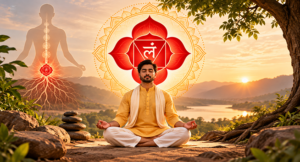

1. What Is the Swadhisthana Chakra?
The Sanskrit term Svādhiṣṭhāna is commonly interpreted as “one’s own abode” or “one’s own seat,” although translations and explanations vary.
In traditional yoga and Tantric descriptions, Swadhisthana is the second principal chakra in the subtle-body system. It is often represented by a six-petalled lotus and associated with the water element.
Its traditional symbolic themes include:
- Emotional experience and awareness
- Creativity and artistic expression
- Adaptability and change
- Pleasure and enjoyment
- Relationships and connection
- Awareness of bodily sensations
These themes provide a framework for reflection and spiritual practice. They should not be interpreted as proof that a physical chakra directly controls emotions, reproductive organs, hormones, or relationships.
Where Is the Swadhisthana Chakra Located?
Traditional descriptions commonly associate the Swadhisthana Chakra with the lower abdomen or pelvic region.
This is a subtle-body location described in yogic philosophy, not a recognised anatomical organ. The location and interpretation of chakras can vary among traditions.
When practising meditation on this area, remain comfortable and avoid forcing the abdomen, pelvic floor, or hips into tension.